Reena Sommer | 20 Jan 2026


The relentless march of technology continuously reshapes the industry landscape, and with it, the models that define modern maintenance operations. A new paradigm has recently emerged: Industry 5.0. This isn't just another incremental upgrade; it represents a fundamental, philosophical shift in how automation is conceived, deployed, and ultimately experienced within contemporary organizations. While its predecessor, Industry 4.0, championed connectivity, robotics, and pure data-driven efficiency, Industry 5.0 re-centers those technologies around three crucial pillars: human well-being, environmental responsibility, and long-term resilience. In practical terms, this means the focus shifts away from simply quantifying how many jobs machines can replace and toward how technology can instead amplify human creativity, dramatically enhance safety, and fundamentally improve complex decision-making.
At face value, Industry 5.0 may seem a subtle shift; its implications are much greater. This is because the shift toward Industry 5.0 occurs amid rising workforce shortages, sustainability mandates, and increasingly complex supply chains. Moreover, automation alone is no longer enough. Businesses need systems that are flexible, ethical, energy-efficient, and designed for collaboration between people and intelligent machines. Industry 5.0 provides that blueprint.
This article examines the rise of Industry 5.0 and its implications for organizations.
The Evolution from Industry 4.0 to Industry 5.0
When Industry 4.0 emerged, it introduced smart factories built on IoT sensors, machine learning, cloud computing, and robotics. These systems dramatically improved production speed, asset visibility, and predictive maintenance. However, the downside of this approach was that in the pursuit of efficiency, it often pushed human workers to the sidelines, turning them into machine supervisors rather than empowered contributors. Over time, this created new problems, including disengaged employees, skill mismatches, safety risks, and rigid systems that struggled to adapt.
Industry 5.0 builds on this robust digital foundation but corrects its shortcomings. Instead of optimizing purely for output, it optimizes maintenance operations for the economic, social, and environmental value they deliver. With this new approach, machines no longer replace workers; they work with them. Data no longer just drives efficiency; it supports better decisions, sustainability goals, and workplace wellbeing. Industry 5.0 is not a technological upgrade; instead, it’s a philosophical one.
What Makes Industry 5.0 a Human-Centric Concept
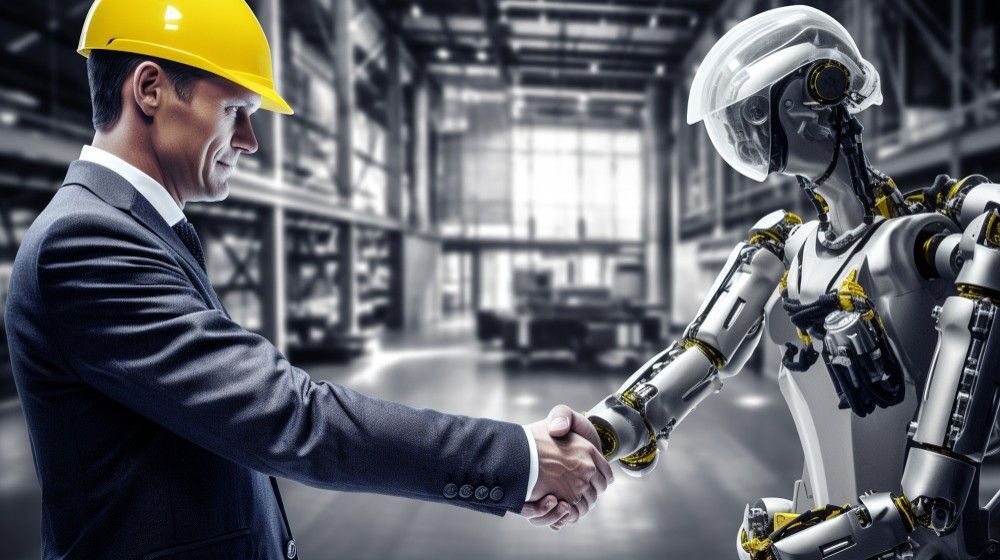
At the core of Industry 5.0 is the simple but powerful idea that people matter. Human-centric manufacturing recognizes that employees bring creativity, judgment, empathy, and contextual understanding that machines cannot replicate. Rather than designing factories around machines, Industry 5.0 designs them around human needs, including safety, ergonomics, mental workload, learning, and autonomy.
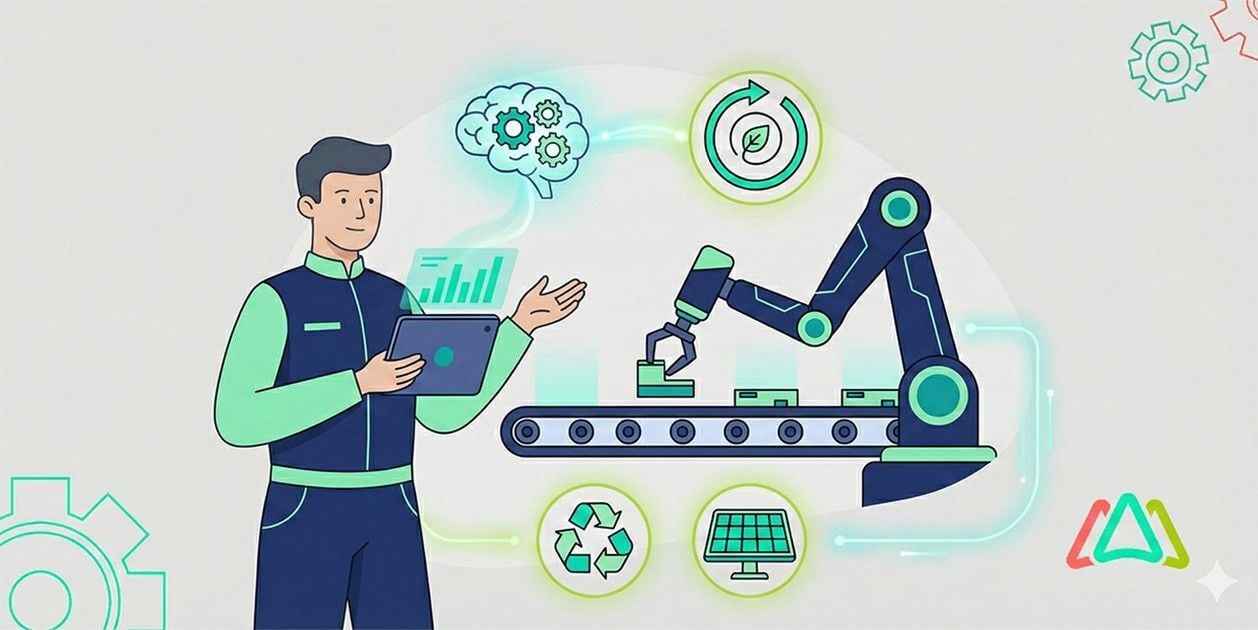
This is where collaborative robots (cobots), AI-assisted decision systems, and wearable technologies come into play. Cobots handle repetitive or hazardous tasks, allowing humans to focus on higher-value work such as diagnosing quality defects, investigating why a machine is drifting out of tolerance, adjusting workflows during supply chain disruptions, and resolving unusual production or maintenance scenarios. AI provides insights, but people retain control over decisions. Using the Industry 5.0 approach, digital systems become tools that empower workers rather than replace them. Research by ScienceDirect highlights that when workers feel supported rather than displaced by automation, engagement, safety, and innovation all increase.
Sustainability in Industry 5.0 Automation
Sustainability is not a simple add-on in Industry 5.0. Instead, it is embedded throughout its industrial design. Automated systems can now monitor energy use, material waste, and carbon emissions in real time, enabling manufacturers to continuously optimize their environmental footprint. Most importantly, instead of maximizing operational throughput at any cost, Industry 5.0 is selective, prioritizing resource efficiency and long-term ecological stability.
This shift also supports the circular economy, in which products are designed from the outset to last longer, be repaired easily, and be reused or recycled. More specifically, with this approach, materials are kept in circulation for as long as possible, extracting maximum value before they are recovered and repurposed into new products. Here, waste is treated as a design flaw rather than an unavoidable outcome. With an Industry 5.0 approach, smart machines can track materials throughout their lifecycles, enabling reuse, remanufacturing, and recycling. In addition, AI-driven planning tools reduce overproduction and inventory waste. The result is that when automation aligns with sustainability goals, companies lower costs, mitigate regulatory risk, and improve brand trust. This is all done while also contributing to climate resilience.
Automation Reimagined: Human-Centric & Sustainable Technologies
Industry 5.0 transforms automation from a control system into a collaboration system. In simple terms, a control system is designed to direct, constrain, and optimize how work gets done, where humans are expected to follow the system. On the other hand, a collaborative system is designed to support, adapt to, and amplify human capability, where technology works with people rather than directing them. This is another example of a subtle shift, but one in which cobots adapt to human movement and behavior. Here, AI models adjust production plans based on worker availability, supply chain changes, and sustainability targets. In addition, digital twins simulate outcomes before physical changes are made, reducing waste and downtime.
These technologies also integrate directly with CMMS Software and asset management platforms. Using these technologies, predictive maintenance not only prevents failures but also reduces unnecessary part replacements and energy use. Human technicians receive actionable insights instead of overwhelming data streams. The bottom line is, automation becomes a partner that supports better decisions, not just faster ones.
Challenges and Strategic Considerations
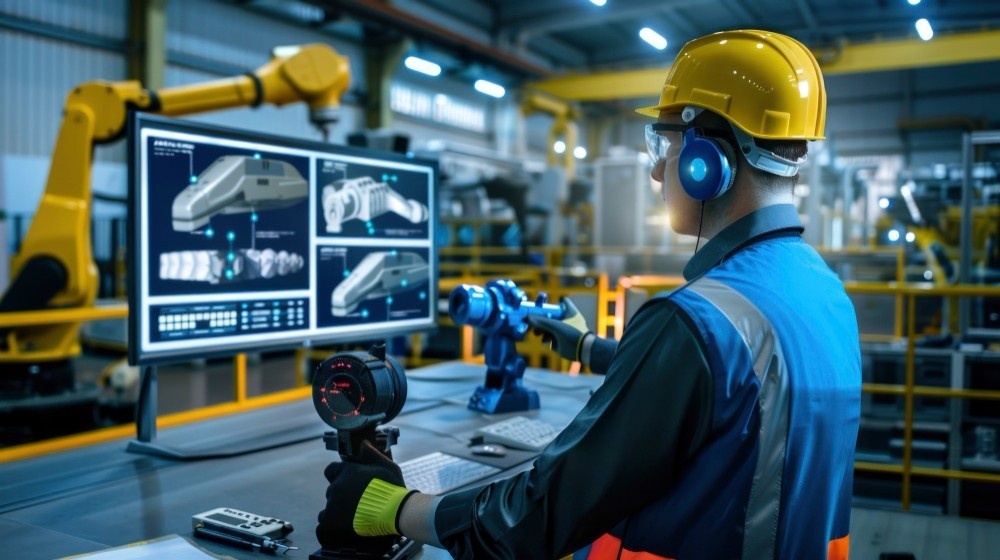
Transitioning to Industry 5.0 presents its own challenges. To begin, organizations must balance automation investments with workforce development. More specifically, they must invest in their people at the same pace they invest in automation, or the technology will outpace the workforce’s ability to use it effectively. Without training, upskilling, and role evolution, advanced systems risk becoming underutilized or resisted, reducing their return on investment. Training needs to focus not only on technical skills but also on collaborating with AI, robotics, and digital platforms. In Industry 5.0, workforce development is what turns automation from a cost into a competitive advantage.
Successfully navigating Industry 5.0 requires organizations to confront key strategic tensions. Specifically, they must balance organizational efficiency with human well-being, reconcile short-term productivity demands with long-term sustainability goals, and manage the tension between automation and human autonomy. Prioritizing machine output maximization without adequate human involvement risks compromising safety, diminishing morale, and undermining environmental objectives. Effective resolution of these challenges depends on strong leadership, clear and transparent governance, and the implementation of systems designed to augment human judgment rather than override it.
In summary, to succeed in Industry 5.0, companies must reconcile efficiency targets with sustainability commitments and employee well-being. Organizations that address these challenges and tensions through participatory design, clear governance, and transparent communication achieve far better outcomes than those that impose technology from the top down.
Industry Applications
In manufacturing, Industry 5.0 enables mass customization without sacrificing efficiency. It does this by combining flexible automation with human creativity and decision-making. Cobots and AI-driven production systems can rapidly adjust to different product designs, while human workers handle customization, quality judgment, and final refinement. This capability allows companies to deliver personalized products at scale without losing the speed and cost advantages of automation.
Operationally, workers guide flexible robotic systems to produce highly personalized products. In logistics, AI optimizes routing while humans handle exceptions and customer interaction. For example, in healthcare and pharmaceutical settings, automation supports precision while humans ensure safety, ethics, and empathy.
The result is, across all sectors, Industry 5.0 enables more innovative asset management. Equipment operates longer, consumes less energy, and produces less waste while technicians remain central to performance, safety, and innovation.
(check out best cmms software for manufacturing)
The Future of Industry 5.0
SAs global regulations, workforce expectations, and environmental pressures increase, Industry 5.0 is positioned to become the dominant industrial model. Companies that continue to pursue automation without human-centric and sustainable design will struggle with talent shortages, compliance costs, and public trust.
The future of Industry 5.0 will be shaped by tighter integration between intelligent machines, human expertise, and sustainability-driven design. As AI, robotics, and digital twins mature, factories will become more adaptive, reconfiguring workflows in real time based on customer demand, workforce availability, and environmental impact. Governments and global regulators are also embedding human-centric and sustainability principles into industrial policy, making Industry 5.0 not just a competitive advantage but a compliance requirement. Organizations that align their asset management, workforce development, and automation strategies with this model will be better positioned to thrive in an economy defined by resilience, customization, and responsible growth.
In summary, companies that embrace Industry 5.0 will gain more than efficiency. They will build resilient operations, empowered workforces, and sustainable business models that can thrive in an uncertain future.
Conclusion
Industry 5.0 represents the most critical shift in industrial automation since the rise of digital factories. It also marks a decisive turning point in how we think about automation, technology, and the role of people in modern industry. The Industry 5.0 model moves organizations beyond the narrow pursuit of efficiency and output toward a more balanced approach, one that values human creativity, ethical decision-making, and environmental stewardship as much as productivity. By aligning advanced technologies with human needs and sustainability goals, Industry 5.0 transforms factories, supply chains, and asset management systems into mechanisms of long-term value rather than short-term optimization.
For organizations investing in smart manufacturing, CMMS platforms, and digital transformation, this shift offers a unique and powerful opportunity. Industry 5.0 enables companies to build more resilient operations, empower their workforce, and meet rising sustainability expectations without sacrificing performance. Those that embrace this human-centric, sustainable approach will not only operate more efficiently but also earn the trust of employees, customers, and society, positioning themselves to lead in the next era of industrial innovation.
TABLE OF CONTENTS