Reena Sommer | 6 Jan 2026


Choosing the right work order software is no longer optional for maintenance teams in 2026. Across manufacturing plants, commercial facilities, schools, utilities, and municipal operations, digital work order systems are essential for tracking maintenance tasks, reducing downtime, and maintaining asset history. It’s not up for debate.
What has changed dramatically in recent years is accessibility. Today, organizations can choose to implement powerful, free work order software or fully customizable open-source work order systems without committing to expensive contracts. This guide explores both options, explains when each makes sense, and highlights the best tools available to U.S. and Canadian maintenance teams. Although this article is written in a North American context, it also applies to maintenance teams worldwide.
Why Work Order Software Matters More Than Ever
Modern work order software replaces manual processes such as spreadsheets, whiteboards, Google Forms, and email chains with a centralized system for managing maintenance activities. Instead of chasing updates or losing service history, teams can assign tasks digitally, capture technician notes and photos, track labor time, and build a complete maintenance record for every asset. Further, mobile apps have made this process almost seamless.
In practical terms, this results in faster response times, greater efficiency, improved accountability, stronger compliance, and fewer unexpected breakdowns. It has also led to improved labor productivity and better management of spare parts inventory. For organizations operating with lean teams or aging infrastructure, work order software has become a core operational tool, not just a “nice to have.”
Work order software (commercial, open source, or free trial) should include the following features:
- Work order management enables users to create, assign, prioritize, and track work orders based on urgency, asset criticality, and available resources. Automated workflows and real-time tracking help teams respond quickly and reduce downtime.
- Preventive maintenance automates recurring maintenance tasks and inspections to minimize equipment failures and extend asset lifespan. By scheduling maintenance based on usage, manufacturer guidance, and historical performance, organizations can proactively address issues before they escalate.
- Asset management allows organizations to track physical assets throughout their lifecycle, including purchase details, maintenance history, and performance, so teams can monitor reliability and manage associated costs effectively. This ties closely to inventory management, which ensures that spare parts are accurately tracked, reorder points are set, and stock levels remain optimized to support maintenance activities without costly shortages or excess.
- Vendor and supplier management features, which centralize supplier data and contracts, improve negotiation power and operational support. It also emphasizes labor and resource management to allocate tasks based on availability and skills, boosting productivity.
- Reporting and KPI tracking provide insights into maintenance performance, helping organizations make data-driven decisions.
- Mobile access empowers technicians to update work orders and check inventory in real time from the field on the work order app.

Best Free Work Order Software
Free SaaS-based work order software is ideal for teams that want quick setup, minimal IT involvement, and strong mobile usability. These platforms are hosted in the cloud and typically offer free options with optional paid upgrades for enhanced functionality. The following is a comprehensive list of top free work order software options for maintenance and facilities management teams. However, organizations looking for a small business work order software option are advised to dedicate sufficient time.
Click Maint CMMS
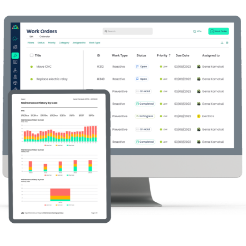
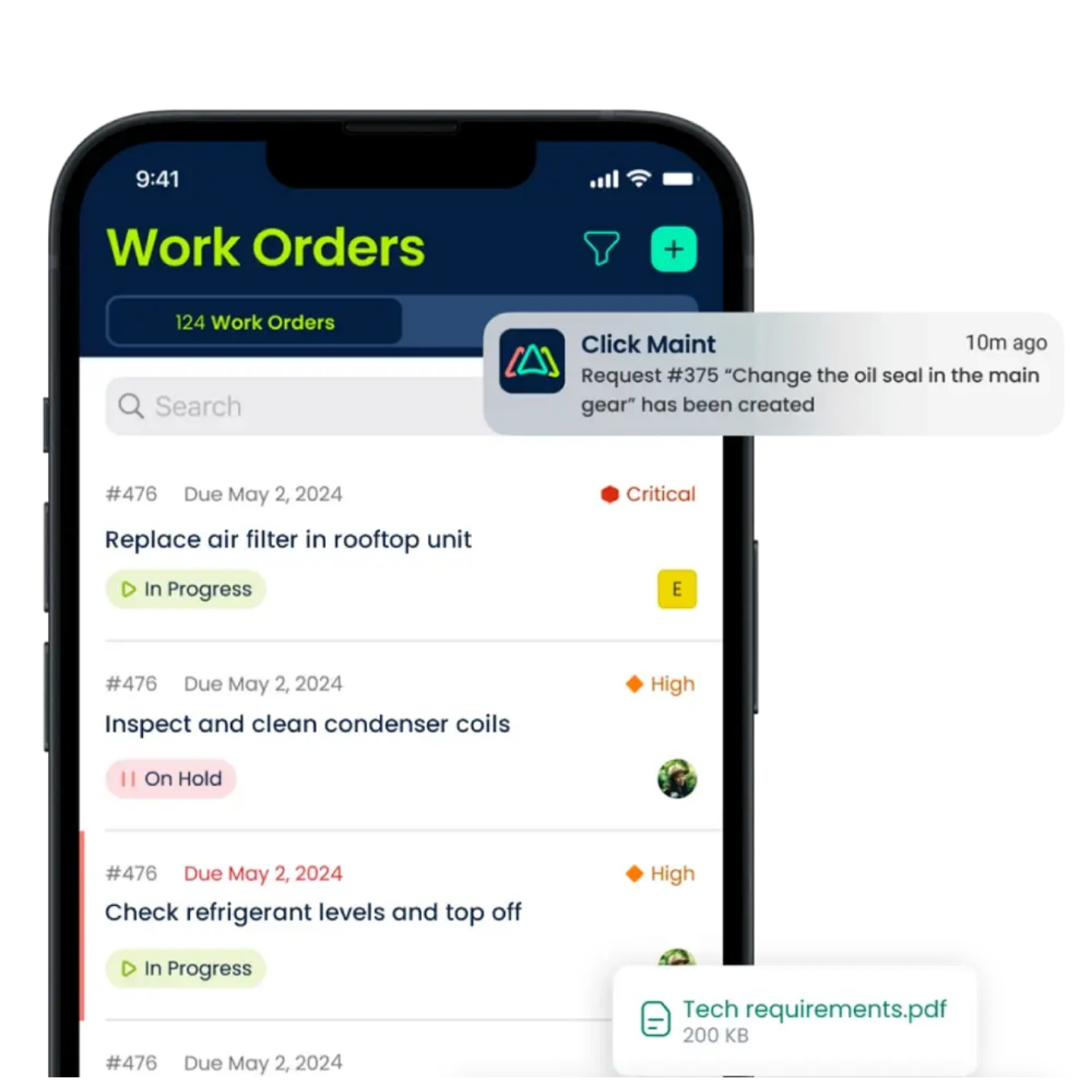
This CMMS Software stands out for its user-centric design and seamless implementation. Click Maint prides itself on an intuitive interface that ensures users can navigate the system effortlessly, promoting quick adoption and reducing training time. The platform's commitment to user-friendliness without compromising functionality makes it an ideal choice for businesses seeking a powerful yet accessible maintenance management solution.
Click Maint has ranked at the top for affordability, making it an accessible solution for small to mid-sized companies. The ease of adoption and time-to-value further make Click Maint a top choice for those seeking a powerful, easy-to-use, affordable CMMS.
Click Maint offers a free trial. Trials can be accessed instantly on the website and typically run for 30 days. If you need an extension, the sales team is pretty flexible. If, after the trial, you find the software meets your requirements, users will only pay USD 35/month. Compared to other products, Click Maint offers many features at that price point: unlimited requesters, work order management, preventive maintenance, asset and inventory management, reports and KPIs, and a downloadable mobile app. (here are some free preventive maintenance software options)
MaintenanceCare
Maintenance Care provides a completely free plan, which has the following free features:
- Submit and manage work orders
- Task status updates
- Web-based interface to see a list of work orders
- It doesn't include features for preventive maintenance software
- It doesn't include asset management or parts and inventory management
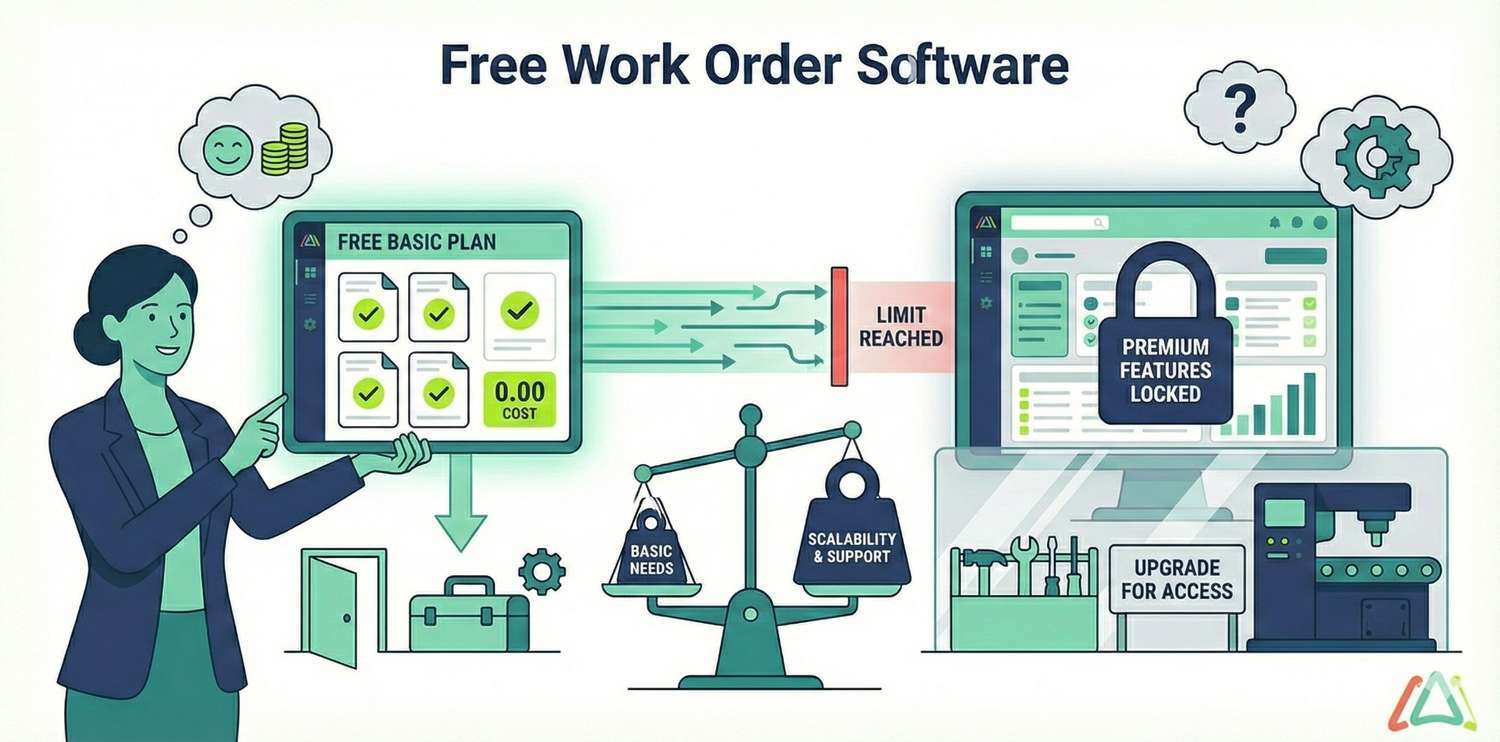
The freemium version is well-suited for organizations focused on managing work orders and tickets. However, if preventive maintenance, asset management, and inventory are priorities, users must select a paid plan to access these features. The free version is quite limited in that it’s limited to 2 users, 3 vendors, and 5 assets, making it more like a trial and not usable long term.
The premium version, which must be paid for, gives most work order software a run for its money. Maintenance Care helps small to large organizations manage work requests, preventive maintenance, and assets. According to Capterra, its preventive scheduling functionality allows users to manage in-progress tasks, scheduled routines, task details, and time slots. Maintenance Care CMMS enables users to create an immersive 3D virtual reality environment where they can view and link their assets to their respective work order requests, improving understanding, communication, and decision-making.
Upkeep CMMS
Upkeep CMMS software is available starting at only $20/month/user.
There is no free tier like Maintenance Care but they do offer a 7-day free trial. The free trial is enough to determine whether Upkeep CMMS aligns with the CMMS buyer’s maintenance management requirements.
Upkeep offers a range of features and capabilities for small and mid-sized businesses and enterprise operations. Features include all the essentials to manage work orders, requests, preventive maintenance, assets, and inventory, as well as more robust functionality that helps teams manage purchase orders, asset performance, IoT, integrations, and more. They also offer a robust, easy-to-use mobile app.
Limble CMMS (Starter Plan)
Limble’s free starter plan provides maintenance teams with a structured introduction to modern work-order software. Users can manage work orders, create task templates, and track basic asset records through both desktop and mobile interfaces.
While preventive maintenance automation and advanced reporting are available only with paid plans, Limble’s free tier is valuable for teams evaluating CMMS platforms or transitioning technicians from paper-based systems to digital workflows. It is particularly popular in light industrial and facilities environments.
Fractal One (Freemium Plan)
Fractal One offers a freemium work order software option that appeals to organizations focused on sustainability, asset visibility, and future IoT integration. The free plan supports work order management, basic asset tracking, QR code scanning, and mobile access.
Although reporting and preventive maintenance capabilities are limited in the free tier, Fracttal is a strong option for teams experimenting with more data-driven maintenance strategies or planning long-term digital transformation.
Fiix CMMS (Limited Free Tier)
Fiix offers a limited free tier that enables organizations to manage work orders and maintain basic asset and parts records. Fiix CMMS's structured design provides standardized workflows and documentation.
While the free version has restrictions on users and advanced features, it is commonly used by schools, municipal departments, and corporate facilities seeking an entry point into structured work-order software.
Best Open-Source Work Order Software
Open-source work order software offers a different value proposition. Instead of cloud-hosted convenience, these platforms provide complete control, unlimited users, and deep customization—at the cost of requiring internal IT resources. Work order software evolution is found wanting in the open-source work order software community.
This blog post on Free CMMS Software highlighted that while open-source software appeals, the total cost of ownership (TCO) quickly adds up. This distracts maintenance teams and calls into question the value of open-source work-order software.
openMAINT
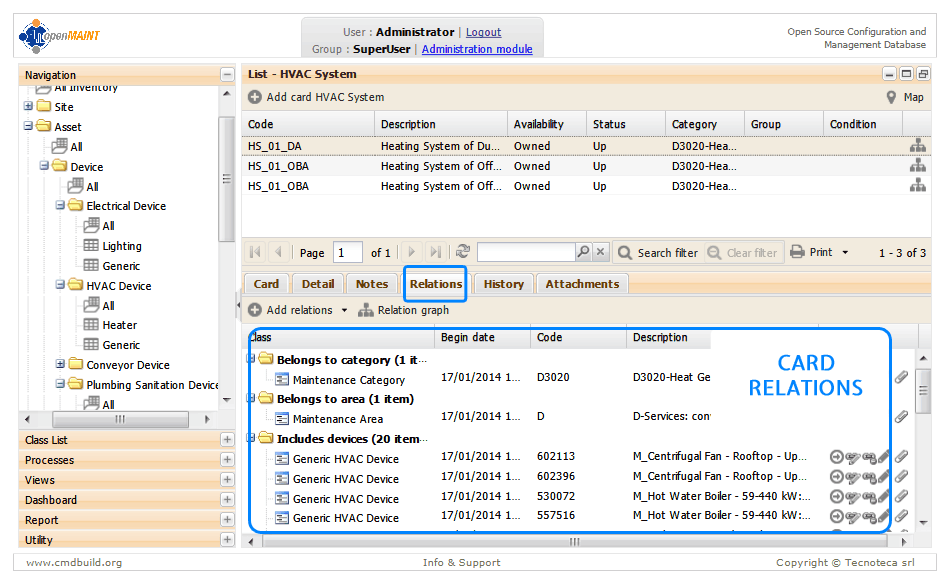
openMAINT is widely regarded as the most comprehensive open-source work order software available today. Built for asset and facility-intensive organizations, it supports corrective and preventive maintenance, asset hierarchies, inventory management, and GIS-based location tracking.
Because openMAINT is self-hosted, organizations retain full ownership of their data and can customize workflows extensively. This makes it especially well-suited for universities, utilities, municipalities, and large campuses that require IT support and meet regulatory requirements.
CMDBuild (READY2USE)
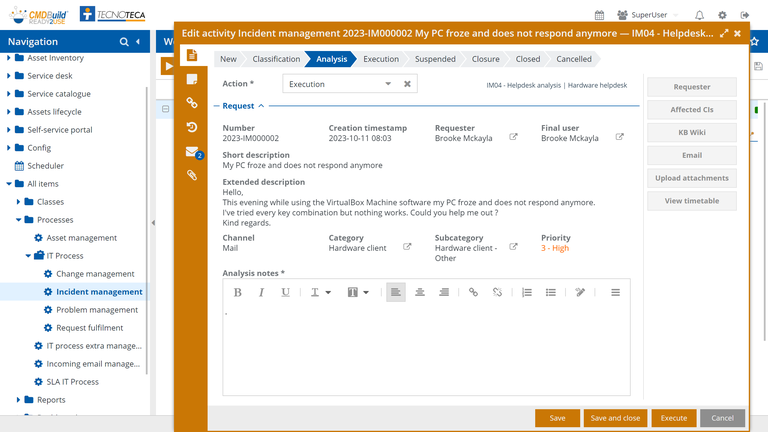
CMDBuild is a flexible, open-source platform that many organizations use to build custom work-order software tailored to their operations. With configurable workflows, dashboards, and asset models, maintenance teams can design systems that match their exact processes.
The READY2USE version accelerates deployment, but CMDBuild still requires technical expertise. It is best suited for organizations with complex maintenance environments and dedicated IT or development teams.
ERPNext (Maintenance Module)
ERPNext includes a robust maintenance module within its broader open-source ERP ecosystem. It supports work orders, preventive maintenance schedules, asset lifecycle tracking, spare parts management, and mobile access.
Because ERPNext connects maintenance with finance, procurement, and operations, it is desirable for manufacturers and multi-site organizations seeking a unified system rather than standalone work order software.

LibrePlan
LibrePlan is not a traditional CMMS, but it is often used to support maintenance operations that function like projects. Its strength lies in resource planning, task scheduling, and Gantt-based workflows. For engineering-heavy or project-driven maintenance teams, LibrePlan can complement other work order systems.
Snipe-IT
Snipe-IT is frequently used alongside open-source work order software to manage tools, equipment, and inventory. While it does not handle work orders directly, its asset tracking and check-in/check-out capabilities make it a valuable supporting system for maintenance departments.
Here is a table outlining your open-source work order software options.
|
Team Type |
Best Open-Source Option |
|
Small teams (1–5 techs) |
openMAINT |
|
Growing teams (6–20 techs) |
ERPNext |
|
Large operations |
CMDBuild |
|
Municipal/government |
openMAINT |
|
Manufacturing/industrial |
ERPNext |
Free vs. Open-Source Work Order Software: Which Is Right for You?
Free SaaS work order software is ideal for teams that want fast deployment, strong mobile usability, automatic updates, and minimal technical overhead. These platforms are especially effective for small to mid-sized teams and organizations without internal IT resources. Speed to value is an essential criterion in this deployment.
Open-source work order software, on the other hand, is better suited for organizations that require on-premise hosting, multiple users, custom workflows, and full data control. Municipalities, utilities, and manufacturers with full-fledged technology teams often find open-source systems more sustainable over the long term. These organizations would do well to estimate the total cost of ownership (TCO) before they venture onto this path of open-source work order software.

Work Order Software Without the Price Tag
In 2026, the work order software industry shows that cost is no longer the primary obstacle to implementing modern maintenance management. Organizations can now realize significant operational value at lower enterprise costs, whether they choose a free cloud-based CMMS or an entirely open-source platform.
The ideal solution is determined less by budget and more by key factors such as your team's size, available technical resources, and long-term strategic goals. Regardless of the choice, 2026 is an opportune time to transition maintenance operations from basic spreadsheets to dedicated, purpose-built work order software.

TABLE OF CONTENTS