Reena Sommer | 3 Feb 2026


Although artificial intelligence (AI) has been around since the mid-1950s, it wasn’t until ChatGPT launched in late 2022 that it entered mainstream use. Before that time, AI applications were primarily in the realms of logic systems, voice recognition, and rudimentary machine learning. As it relates to maintenance and facility operations, AI is no longer an emerging technology found on the fringe of maintenance operations. Instead, it is increasingly becoming embedded in the daily systems that keep facilities running optimally. From predictive work orders to automated asset prioritization, AI is responsible for transforming how maintenance teams plan, respond, and optimize their work. As this shift accelerates, AI skills for maintenance professionals are no longer optional; they are rapidly becoming core competencies that will define success by 2030.
Unlike previous technology waves that focused primarily on automation, AI in maintenance is fundamentally about insight, the ability to grasp, analyze, and communicate complex information. In the maintenance world, this translates into AI’s ability to interpret vast amounts of asset, sensor, and operational data that humans alone could never detect, or at least, not with the speed that AI can.
There is no doubt that AI offers tremendous benefits to maintenance operations; however, they are only valuable if maintenance professionals understand how to interpret, validate, and act on them. Let’s delve into the top skills maintenance professionals will need to utilize AI-driven intelligence effectively.
The Changing Role of Maintenance Professionals in an AI-Driven Environment
Until recently, maintenance professionals’ skill level was judged by their ability to fix problems quickly and keep equipment running. Today, thanks to emerging technologies, including AI, that role is evolving toward proactive asset stewardship and strategic risk management. AI-enabled CMMS platforms can forecast failures, optimize schedules, and recommend interventions long before breakdowns occur. This shift change raises the bar on how effectively maintenance is achieved.
AI is set to elevate the role of maintenance professionals, not replace them. Maintenance teams are increasingly relying on shared data insights to collaborate effectively with operations, IT, and leadership. By acquiring necessary AI skills, maintenance professionals will become vital interpreters, translating technical signals from intelligent systems into informed operational decisions and real-world maintenance actions.
For instance, AI-assisted insights will allow maintenance staff to clearly articulate the necessity of immediate pump service over delaying the task, or to justify an asset replacement instead of a repair. The future maintenance technician will be a crucial link, using AI to bridge intelligent systems and practical maintenance conditions.
The following section outlines the key skills maintenance teams will need to utilize AI technology effectively.
Skill #1: AI-Assisted Predictive Maintenance Interpretation
One of the most impactful AI skills maintenance professionals can learn is interpreting predictive maintenance outputs. AI systems can identify anomalies, calculate failure probabilities, and estimate remaining useful life, but they do not inherently understand operational nuance. By learning to interpret AI’s predictive maintenance data, they will be able to evaluate these predictions in the context of asset criticality, usage patterns, safety risks, and business impact.
In manufacturing environments, for example, AI may flag early vibration anomalies on rotating equipment. A skilled maintenance professional understands whether that anomaly represents a tolerable variance or a sign of imminent failure based on production schedules and redundancy. In healthcare facilities, predictive alerts on HVAC systems must be evaluated with patient safety and regulatory requirements in mind, often requiring earlier intervention than the AI model alone might suggest.
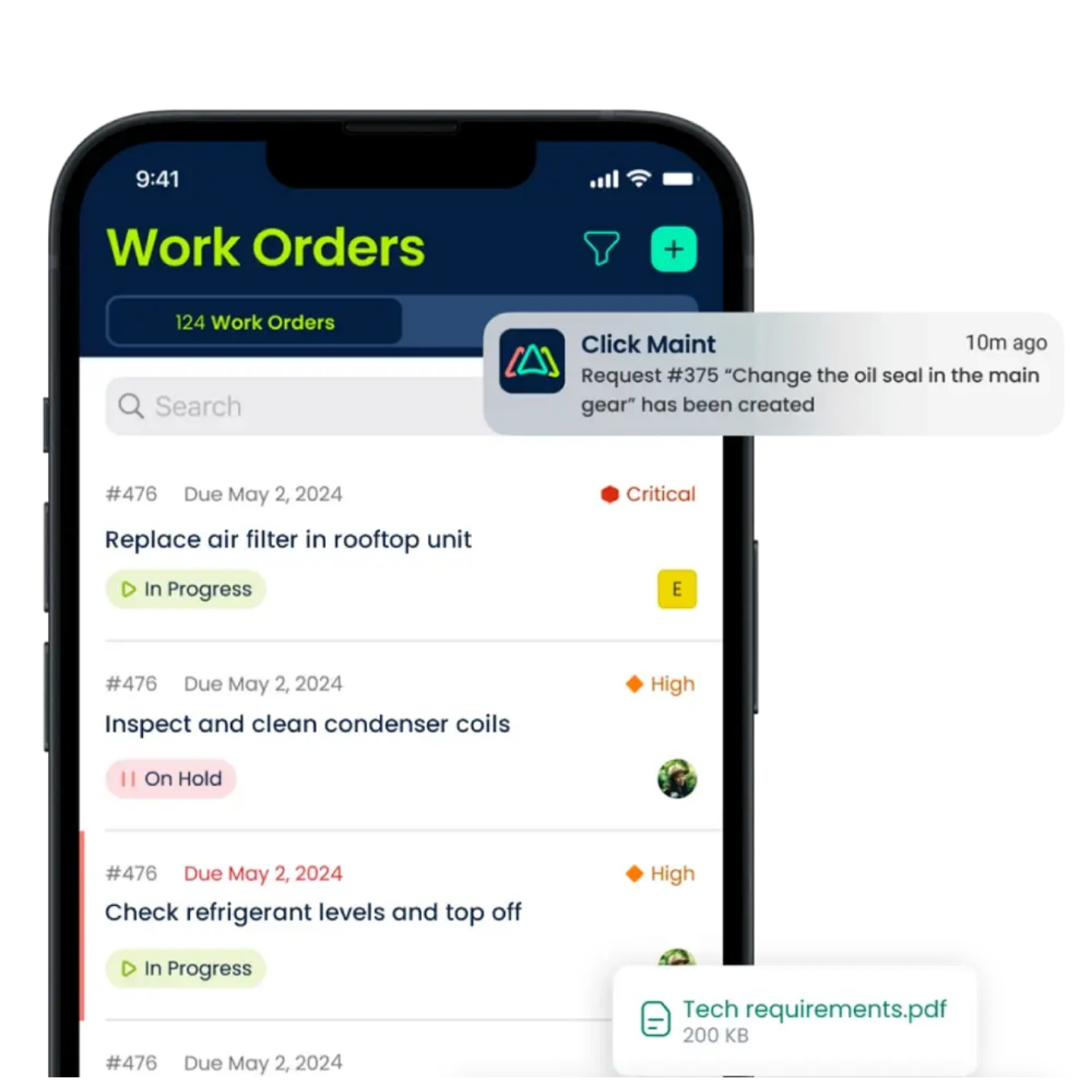
Within a CMMS, Software, this skill involves reviewing AI-generated work orders, validating failure predictions, and prioritizing tasks. Maintenance professionals who can confidently interpret AI outputs prevent unnecessary maintenance and avoid costly and often labor-intensive surprises.
Skill #2: Data Literacy and Asset Data Contextualization
AI systems are only as effective as the data they consume. This is where data literacy comes into play: the ability to understand, interpret, and use data accurately to make informed decisions, ask the right questions, and take effective action in real-world operational contexts. As such, data literacy is one of the most essential AI skills for maintenance professionals. Although it may sound intimidating at first, acquiring data literacy does not require advanced data science knowledge. Instead, it does require understanding how asset data is generated, structured, and interpreted across systems. Developing data literacy is essential for maintenance professionals, enabling them to differentiate between significant trends and irrelevant data “noise”.
In industries like energy and utilities, sensor data from remote assets may be incomplete or inconsistent due to environmental conditions. Maintenance teams must know how these gaps affect AI recommendations. In educational facilities, inconsistent work order histories can distort failure trends, leading to poor forecasting. Data literacy allows maintenance professionals to identify these weaknesses and correct them at the source.
From a CMMS perspective, this skill includes maintaining accurate asset hierarchies, ensuring consistent failure codes, and capturing detailed maintenance history records. AI relies on this foundation to generate reliable insights, making maintenance teams direct contributors to AI success rather than passive users.
Skill #3: Working with AI-Enhanced CMMS and EAM Platforms
Modern CMMS and EAM platforms increasingly embed AI to automate prioritization, optimize scheduling, and recommend maintenance strategies. Understanding how to work with these features is a critical AI skill for maintenance professionals. With this understanding, maintenance technicians won’t just blindly accept system recommendations; instead, they will know how these tools arrive at conclusions and how to adjust them to reflect operational realities.
In logistics and warehousing operations, AI-driven scheduling can optimize labor efficiency by grouping tasks by geography or asset type. However, maintenance professionals must account for access constraints, safety procedures, and production windows that AI may not fully capture. In hospitality and commercial facilities, AI-recommended maintenance windows must align with occupancy patterns and guest experience considerations.
CMMS-focused AI skills include configuring alert thresholds, validating automated work order creation, and aligning AI insights with preventive maintenance strategies.
Maintenance professionals who master these capabilities ensure that AI enhances, rather than disrupts, daily operations.
Skill #4: Human-AI Decision-Making and Ethical Judgment
As AI systems take on more responsibility in maintenance decision-making, human judgment becomes more critical. One of the most overlooked AI skills for maintenance professionals is the ability to balance algorithmic recommendations with ethical responsibility, safety considerations, and organizational accountability.
In regulated industries such as pharmaceuticals or food production, AI may suggest extending maintenance intervals to reduce downtime. In this instance, maintenance professionals must evaluate whether those recommendations align with compliance standards and risk tolerance. In public infrastructure or transportation, decisions influenced by AI can directly impact human safety, requiring careful oversight. This is when a maintenance professional’s ability to balance AI recommendations with organizational needs, obligations, and priorities is tested.
Within CMMS platforms, this skill manifests as knowing when to override automated priorities, delay AI-recommended actions, or escalate issues to leadership. The bottom line is, maintenance professionals must remain accountable for outcomes, making ethical decision-making a cornerstone of AI adoption.
Skill #5: Continuous Learning and AI Adaptability
AI technologies evolve rapidly, making a maintenance technician’s ability to adapt a core competency. Maintenance professionals must be willing to learn as AI models improve continuously, new data sources are integrated, and system capabilities expand. This mindset is one of the most future-proof AI skills for maintenance professionals.
In industries such as smart manufacturing and renewable energy, AI systems are continually refined using new performance data. Maintenance teams who engage in ongoing training and experimentation can extract increasing value from these systems over time. In contrast, teams that treat AI as a one-time implementation often see diminishing returns and fall behind in a competitive marketplace.
From a CMMS perspective, adaptability includes learning new features, participating in pilot programs, and collaborating with vendors and internal stakeholders. Maintenance professionals who embrace continuous learning become leaders in digital transformation rather than followers struggling to keep pace.
How AI Skills for Maintenance Professionals Support Career Growth
TFor maintenance technicians, developing AI skills means much more than acquiring operational efficiency; it is about expanding their long-term career resilience. Maintenance professionals who can interpret AI insights, manage intelligent systems, and communicate data-driven decisions are increasingly viewed as strategic assets within their organizations.
Developing AI skills opens pathways into leadership roles, reliability engineering, asset management, and digital transformation initiatives. As organizations invest heavily in AI-enabled maintenance systems, they also seek out professionals who can bridge the gap between technology and operations. A maintenance professional with AI skills positions them as a powerful differentiator in a competitive workforce.
Preparing Today for Maintenance Success in 2030
The good thing is, building AI capabilities does not require a complete overhaul of existing processes. In other words, organizations can start by integrating AI-enabled CMMS features, improving data quality, and investing in targeted training. To facilitate AI user capabilities and skills, maintenance professionals should be involved early in AI initiatives to ensure tools align with real-world workflows.
By gradually building familiarity and confidence, teams can scale AI adoption without disruption. The key is recognizing that AI skills for maintenance professionals are not just a future requirement; they are a present investment with long-term returns.
Conclusion: AI Skills as the Foundation of Future-Ready Maintenance Teams
By 2030, maintenance excellence will be defined not only by technical expertise but by the ability to work effectively with intelligent systems. In the near future, AI will continue to transform how maintenance is planned, executed, and optimized. The qualifier, though, is that success will depend on the people guiding those systems.
This evolution will not look the same across all organizations. In larger enterprises, maintenance and facilities management professionals will increasingly operate as strategic system owners, overseeing complex asset portfolios, standardizing processes across sites, and collaborating closely with IT, operations, and leadership. Their role will center on interpreting AI-driven insights, ensuring data quality, and aligning predictive and prescriptive tools with broader business objectives.
In smaller organizations, maintenance professionals will remain highly hands-on, often wearing multiple hats. AI will act less as a centralized decision engine and more as a force multiplier, helping lean teams prioritize work, prevent failures, and make smarter decisions without adding headcount. Here, success will depend on practical AI fluency: knowing how to trust, validate, and act on system recommendations in real time.
Across both environments, maintenance professionals who develop AI skills today position themselves and their organizations for safer operations, higher asset reliability, and more intelligent decision-making. In a world where data drives performance, AI skills for maintenance professionals will serve as the foundation of future-ready maintenance teams, regardless of company size.
TABLE OF CONTENTS