Reena Sommer | 5 Feb 2026


You may be wondering: if you are already using CMMS software in your organization, aren’t your maintenance operations already centralized? Well...not necessarily.
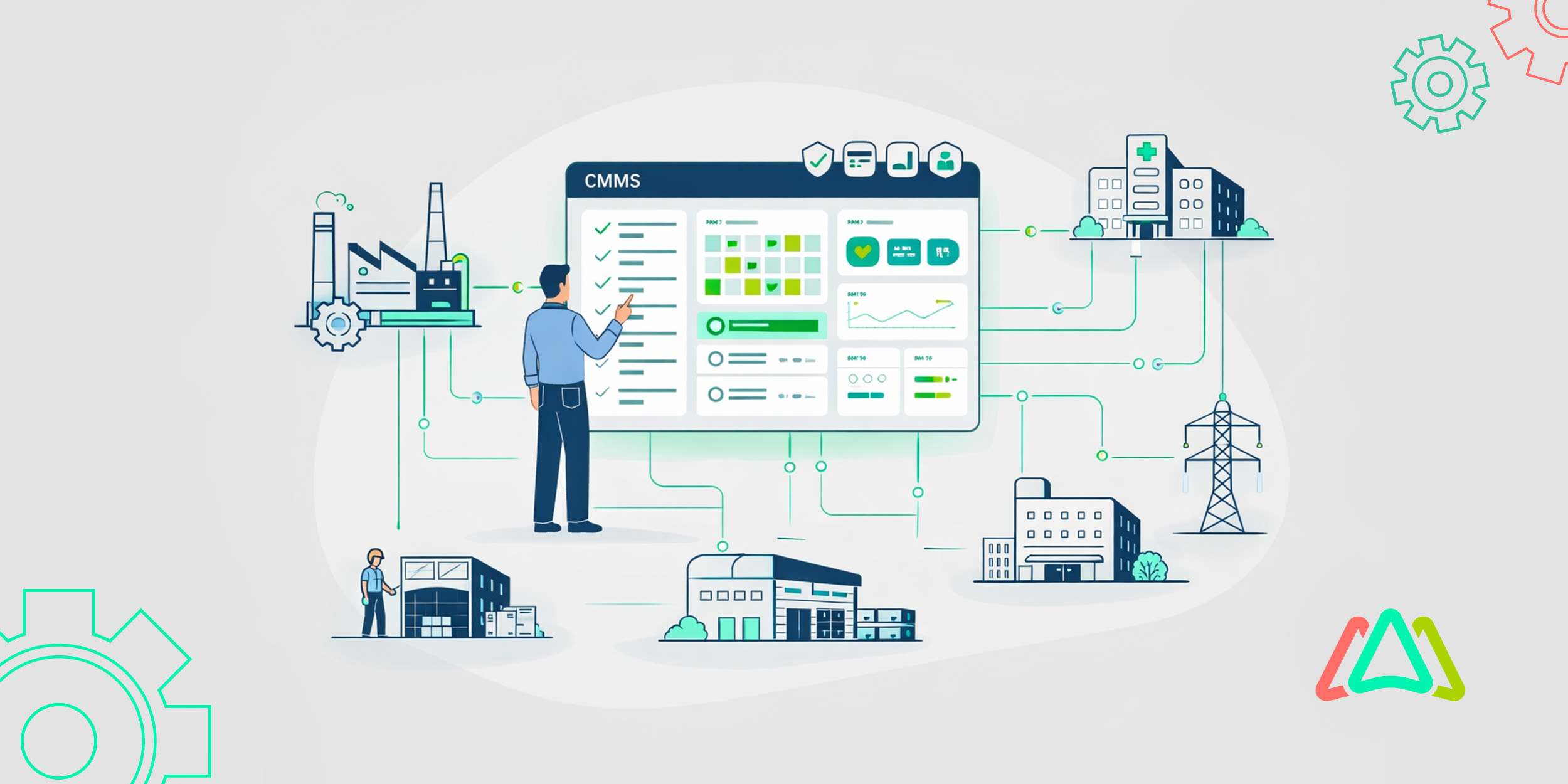
While a CMMS centralizes facility and asset information, such as work orders, PM schedules, asset history, and inventory into a single system of record, centralized maintenance goes beyond these basics because it is about how decisions, governance, and work execution are organized.
At its core, a CMMS provides maintenance and facility managers with visibility across sites and ensures consistency in how maintenance activities are documented and tracked. However, many organizations use a CMMS while still operating under a decentralized maintenance model, in which each site independently plans work, sets priorities, controls budgets, and makes staffing decisions.
This article examines the application of centralized maintenance in detail, exploring why companies are moving toward it, the benefits it delivers, the critical role of a CMMS, and how centralization fits into an overall maintenance strategy. The expectation is that readers will gain deeper insight into the full potential of a CMMS. Let’s begin with some basics.
What is Centralized Maintenance?
Centralized maintenance is a maintenance management approach in which planning, scheduling, oversight, and often execution of maintenance activities are coordinated through a single, centralized team or function. Rather than individual sites or departments managing their own maintenance independently, centralized maintenance brings processes, standards, and decision-making together under one organizational structure. This model is most commonly used in organizations with multiple facilities, large asset portfolios, or complex compliance requirements.
Centralized maintenance goes beyond shared data. It means that planning, prioritization, standards, and performance management are coordinated through a central function. Decisions about what work gets done, when, and why are made with an enterprise-wide perspective, often supported by, but not defined by, CMMS software.
In short, a CMMS is a facilitator of centralized maintenance, but it is not proof of it. You can have centralized data without centralized maintenance, but you cannot successfully operate centralized maintenance without a CMMS.
At the end of the day, as organizations struggle with increasing pressure to control costs, extend asset life, and improve operational reliability, centralized maintenance has emerged as a strategic solution. By consolidating maintenance activities, organizations gain greater visibility into asset performance, labor utilization, and maintenance spend across the enterprise.
Why Centralization? Understanding the Shift
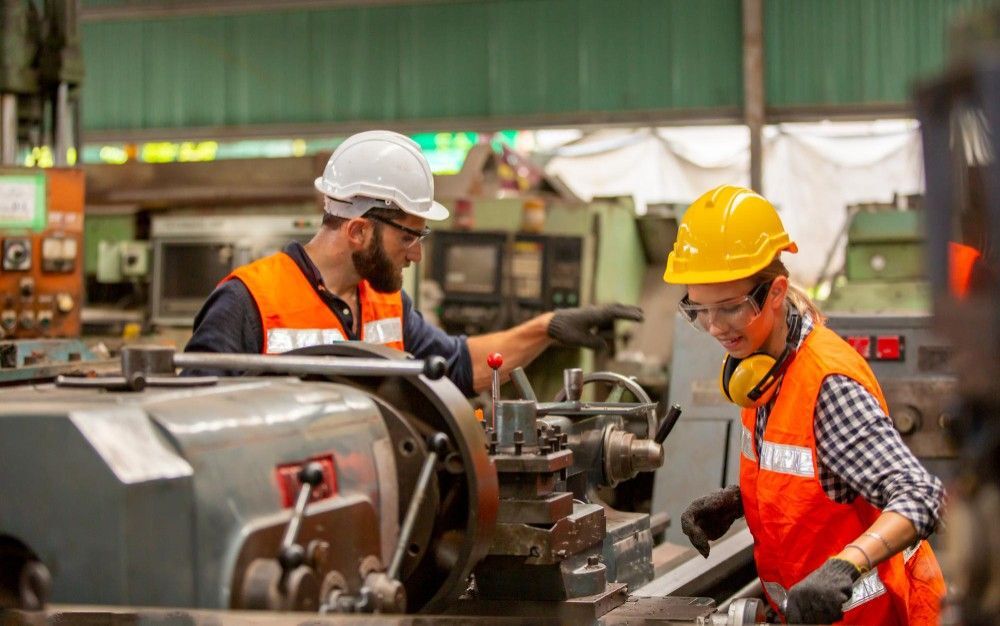
The shift toward centralized maintenance is primarily driven by operational complexity and the need for greater efficiency. Many organizations that historically relied on decentralized maintenance models now struggle with inconsistent processes, duplicated efforts, and limited visibility across sites. When each location operates independently, it becomes challenging to standardize preventive maintenance, enforce safety and compliance requirements, or accurately compare performance between facilities.
Centralized maintenance takes on these challenges by establishing a unified structure for decision-making and execution. It enables organizations to allocate skilled labor more effectively, prioritize work based on enterprise-wide risk, and respond more strategically to unplanned downtime. In environments marked by skilled labor shortages, rising material costs, and increasing regulatory scrutiny, centralization allows maintenance teams to do more with fewer resources while maintaining consistency and control.
Industries such as manufacturing, healthcare, education, utilities, and logistics can all benefit most from centralized maintenance due to their distributed assets and operational interdependencies. For these organizations, centralization is not just an operational change. Instead, it is a strategic shift that promotes long-term reliability, scalability, and resilience.
The Role of a CMMS in Centralized Maintenance
It’s well known that a CMMS is the backbone of any successful centralized maintenance program. Without a CMMS, centralization quickly becomes difficult, if not impossible, to manage, as teams lack the real-time data and coordination needed to effectively oversee multiple facilities and asset groups. A CMMS provides the structure, visibility, and control required to manage maintenance from a central point while still supporting site-level execution.
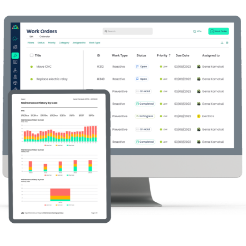
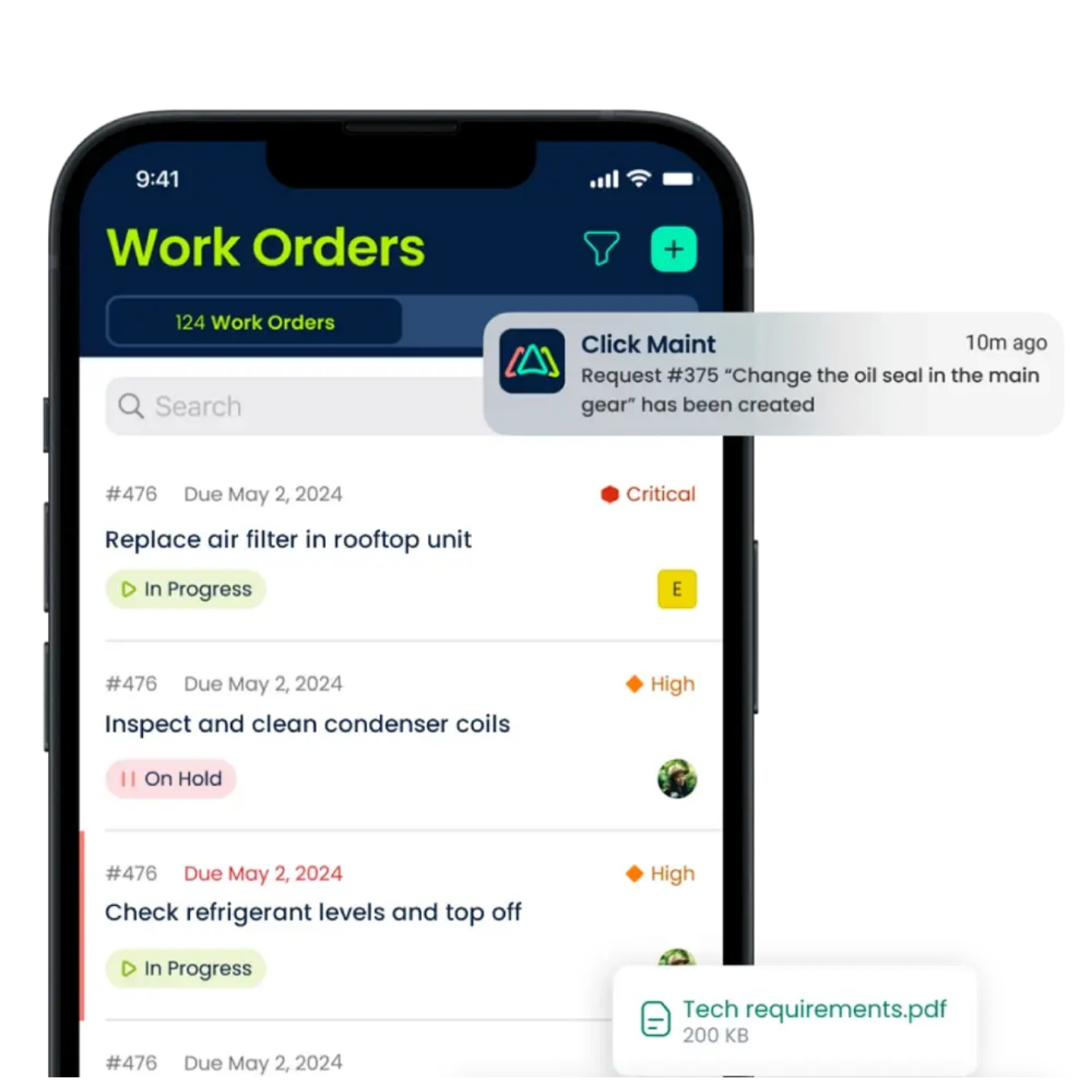
Through CMMS systems, centralized maintenance teams can standardize work order processes, preventive maintenance schedules, and asset data across all locations. Asset hierarchies ensure consistent tracking of equipment, while centralized dashboards and reports provide insight into key performance indicators, such as downtime, backlog, labor efficiency, and maintenance costs. This visibility enables better prioritization, more informed decision-making, and improved long-term planning.
Beyond these capabilities, a CMMS also supports centralized inventory management by tracking spare parts usage, optimizing stock levels, and reducing excess inventory across sites. Integration with ERP, procurement, and financial systems strengthens centralized maintenance by aligning maintenance activities with broader business processes. In essence, a CMMS transforms centralized maintenance from a concept into a scalable, data-driven operating model.
The Benefits of Centralized Maintenance
One of the biggest advantages of centralized maintenance is its ability to improve efficiency and consistency across the organization. By combining maintenance planning and oversight, organizations eliminate redundant processes that often emerge when sites operate independently. Central maintenance teams can standardize workflows, preventive maintenance schedules, and asset classifications, ensuring that best practices are applied uniformly rather than reinvented at each location.
Centralized maintenance also significantly improves resource utilization. Skilled technicians can be deployed where they are most needed, rather than being confined to a single facility that may experience fluctuating workloads. This flexibility helps organizations address labor shortages more effectively while reducing reliance on emergency contractors or overtime. By the same token, centralized inventory management reduces excess spare parts, minimizes stockouts, and lowers carrying costs by enabling shared visibility across sites.
Centralized maintenance also enhances data-driven decision-making. When asset performance, maintenance history, and cost data are consolidated, maintenance and facility management leaders gain a comprehensive view of reliability trends and risk areas. This visibility supports better forecasting, more accurate budgeting, and smarter lifecycle decisions for assets. Over time, these improvements translate into lower maintenance costs, reduced downtime, and stronger operational resilience.
How Centralized Maintenance Fits Into the Overall Maintenance Strategy
Centralized maintenance is not intended to be viewed as a standalone operating model. More precisely, it should be regarded as a core component of an organization’s broader maintenance strategy. When appropriately aligned, centralized maintenance supports key business objectives such as cost control, asset reliability, safety, and regulatory compliance. By establishing centralized governance over maintenance planning, standards, and performance measurement, organizations create a consistent framework that supports long-term operational goals.
From a tactical perspective, centralized maintenance enhances preventive and predictive maintenance initiatives. Standardized preventive maintenance programs can be centrally designed and consistently deployed across all assets and facilities, reducing execution variability. As condition monitoring and predictive technologies continue to mature, centralized teams are better positioned to analyze trends, prioritize interventions, and allocate resources based on enterprise-wide risk rather than isolated site-level concerns.
Most organizations ultimately adopt a hybrid approach to centralized maintenance. This means that strategic oversight, planning, and analytics are centralized, while task execution remains close to the assets. In this hybrid model, centralized maintenance provides direction, prioritization, and performance management, while local teams retain the agility needed to respond to day-to-day operational realities. When guided by strong leadership, governance, and CMMS technology, centralized maintenance becomes a unifying force that connects maintenance activities directly to business outcomes.

Industry Examples of Centralized Maintenance in Practice
The beauty of centralized maintenance is its wide scope and applications. In manufacturing environments, centralized maintenance is often used to standardize asset management across multiple plants. Central maintenance teams define maintenance standards, manage reliability programs, and analyze downtime trends across production lines, while site technicians focus on execution. This approach improves consistency, enables benchmarking between plants, and supports enterprise-wide continuous improvement initiatives.
Healthcare organizations frequently rely on centralized maintenance to manage compliance, risk, and life safety systems across hospitals and outpatient facilities. A centralized maintenance structure allows for consistent inspection schedules, documentation, and regulatory reporting, while ensuring that critical assets supporting patient care receive appropriate prioritization without gaps. The result is improved compliance readiness and reduced risk exposure.
In education, utilities, and logistics operations, centralized maintenance helps organizations manage geographically dispersed assets more efficiently. School districts can centralize planning for HVAC, electrical, and transportation assets, utilities can coordinate maintenance across substations and field equipment, and logistics providers can standardize fleet and facility maintenance practices. Moreover, it ensures that all facilities are ready and compliant for inspections and audits when they occur. In each case, centralized maintenance improves visibility, reduces duplication, and supports more intelligent capital and logistics planning.
Conclusion
At this point, you may still be wondering if centralized maintenance is right for your organization. Let’s briefly sum up: centralized maintenance provides a robust framework for organizations seeking greater efficiency, consistency, and control over their maintenance operations. By consolidating planning, standardizing processes, and leveraging enterprise-wide data, organizations can improve asset reliability while reducing unnecessary costs and operational risk. When supported by a capable CMMS, centralized maintenance becomes a scalable, data-driven approach rather than an administrative burden.
It’s still important to understand that centralization is not a one-size-fits-all solution. Its success depends on organizational maturity, asset complexity, and the ability to balance centralized oversight with local execution. Organizations considering centralized maintenance should evaluate their current processes, data readiness, and change management capabilities before making the transition.
Ultimately, when implemented thoughtfully, centralized maintenance becomes more than an operational model; it becomes a strategic vehicle. It connects maintenance activities to business goals, supports continuous improvement, and positions organizations to adapt to evolving operational demands with confidence.
TABLE OF CONTENTS