


Reena Sommer | 17 Mar 2026
Share this page:


How CMMS Software Improves Maintenance in Senior Living Facilities
Introduction
The United States is in the midst of a demographic shift rarely seen in its history. Today, adults aged 65 and older represent approximately 17–18% of the U.S. population, and that share is expected to continue rising, reaching about 22–23% by 2040–2050 as the Baby Boomer generation ages. In 2022, the number of Americans aged 65 and older was 57.8 million, and this number is projected to increase to between 83.7 million and 88 million by 2050, representing a nearly 42% increase over this period.
Not only are more Americans living longer into their senior years, but many are also living with chronic health conditions such as heart disease, arthritis, diabetes, and sensory limitations. This population is also inherently more vulnerable to hazards, such as falls, in their daily lives. The result is that many seniors require additional care and assistance with activities of daily living, driving demand for assisted living, memory care, and other senior living services.
Given the increase in care needs that accompany the senior sector, it is important to note that senior living facilities operate in one of the most demanding maintenance environments in property management, mainly because, unlike commercial office buildings or retail spaces, they are home to residents who depend on safe surroundings, reliable equipment, and comfortable living conditions every single day. In this demanding environment, a system failure is not just an inconvenience; it can directly affect resident health, safety, and quality of life.
This article explores how and why a CMMS for senior living facilities has become essential for maintaining them. Let’s begin with some basics.
How CMMS Software Improves Senior Living Facility Maintenance
A Computerized Maintenance Management System (CMMS) is software designed to centralize maintenance operations, including work order management, preventive maintenance scheduling, asset tracking, reporting, and compliance documentation. In senior care environments, it transforms maintenance from a reactive function into a proactive, strategic operation that supports both resident well-being and financial sustainability.
Let’s now turn to how senior living CMMS software improves maintenance operations and addresses the most pressing challenges faced by assisted living and long-term care facilities.
Why Senior Living Facilities Need a CMMS
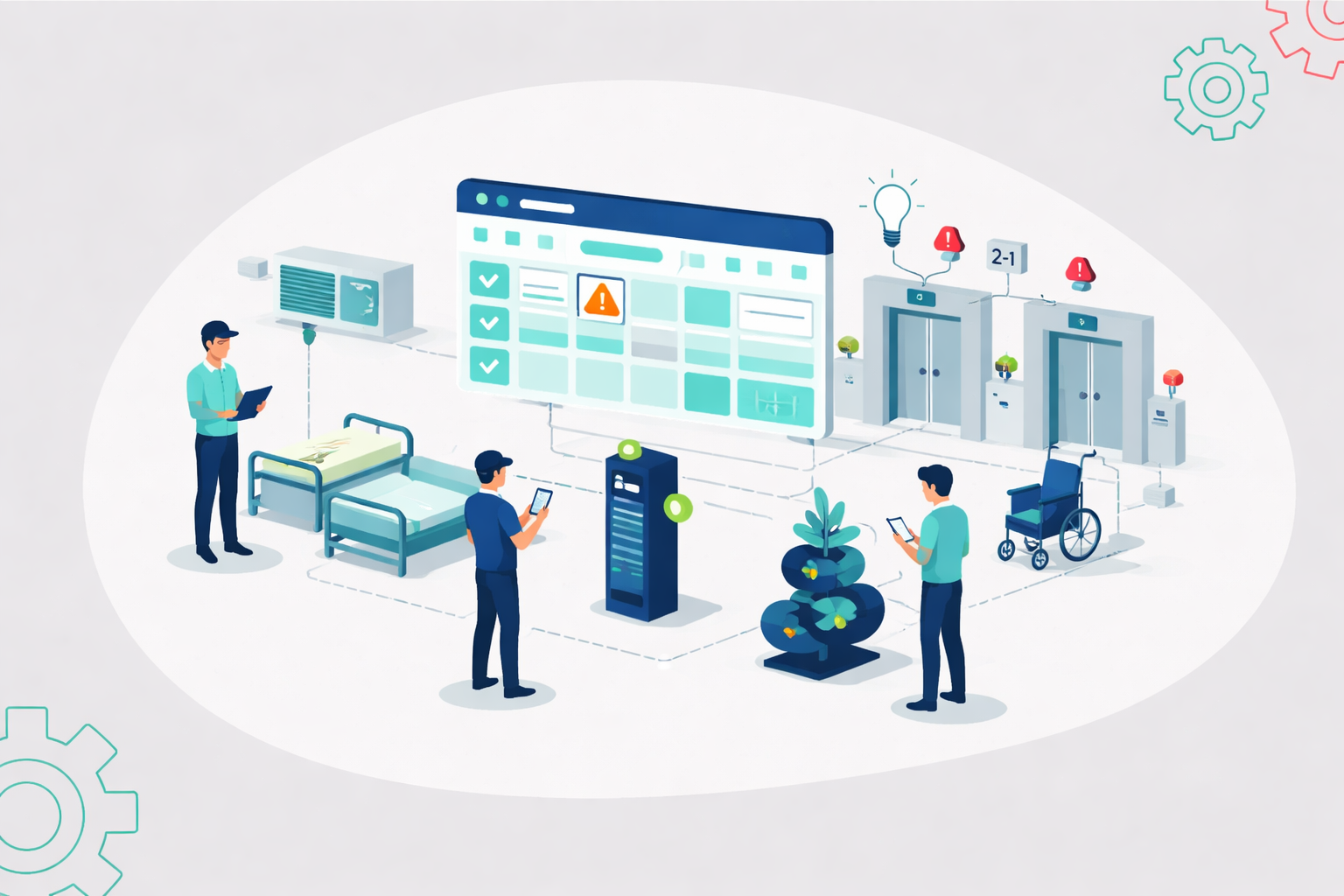
Senior living communities manage a vast and complex network of assets and systems. For example, HVAC systems regulate comfort, elevators ensure accessibility, emergency call systems protect residents, and medical and assistive devices must function without interruption. Add to this list lighting, plumbing, fire safety systems, kitchen equipment, laundry facilities, and security systems, all of which require consistent oversight.
Not too long ago, many senior care facilities relied on paper logs, spreadsheets, or disconnected communication methods to manage maintenance tasks. When facilities were smaller and less complex, these methods worked reasonably well. However, reliance on these manual systems today is found to pose the following limitations:
- Delayed responses to work orders
- Missed preventive maintenance schedules
- Poor documentation during inspections
- Limited visibility into maintenance costs
- Increased reactive repairs
A CMMS designed for healthcare and senior living facilities consolidates all maintenance data into one centralized platform. Maintenance teams can track assets, schedule recurring tasks, monitor technician productivity, and generate compliance reports, all in real time.
The result is improved efficiency, greater accountability, and stronger operational control.
Addressing Core Maintenance Challenges in Senior Living Facilities
Senior living environments face distinct operational pressures. ACMMS for senior living facilities directly addresses the following challenges:
1. Maintaining Safety and Accessibility for Residents
Safety is the highest priority in any senior living community. Residents may have mobility limitations, cognitive challenges, or medical conditions that increase vulnerability. Even minor facility issues can quickly escalate into serious risks.
Common safety concerns include:
- Poor lighting in hallways or parking areas
- Malfunctioning automatic doors
- Broken handrails
- Uneven flooring or loose tiles
- Elevator interruptions
- Slippery surfaces
Without a structured system, safety-related work orders may be delayed or overlooked.
A CMMS for senior living facilities ensures that safety issues are prioritized and tracked from submission to resolution. Work orders can be categorized by urgency level, automatically routed to technicians, and monitored for completion within defined response times.
Additionally, scheduled safety inspections, such as checking fire extinguishers, exit signage, emergency lighting, and fall-prevention measures, can be automated through preventive maintenance workflows. This reduces the likelihood of overlooked hazards and strengthens overall resident protection.
2. Ensuring Reliability of Medical and Assistive Equipment
Senior living facilities rely heavily on equipment that directly supports resident care. Here are some examples:
- Patient lifts
- Oxygen delivery systems
- Medication refrigeration units
- Nurse call systems
- Wheelchair charging stations
- Automated medication dispensers
Equipment failure in these areas can disrupt care delivery and, more importantly, place residents at risk.
A CMMS for senior living facilities allows facilities to create preventive maintenance schedules based on manufacturer recommendations, usage patterns, or regulatory requirements. Each asset maintains a digital history including service records, warranty information, parts replaced, and downtime events.
By tracking equipment lifecycle data, maintenance managers can anticipate failures before they occur and make informed decisions about repair versus replacement. The result is improved equipment reliability and reduced emergency repairs.
3. Managing Wear and Tear in High-Use Areas
Senior living communities experience constant foot traffic in common areas such as:
- Dining rooms
- Activity centers
- Physical therapy rooms
- Corridors
- Lobbies
- Outdoor gathering spaces
These high-use areas experience accelerated wear on flooring, doorways, furniture, HVAC systems, and lighting.
Without proactive oversight, small issues can quickly degrade the facility's appearance and safety. Peeling flooring, stained ceilings, or inconsistent temperature control negatively impact resident satisfaction and family perception.
A CMMS for senior living facilities enables facilities to schedule routine and recurring inspections of high-traffic areas. Maintenance teams can track recurring issue patterns and allocate resources strategically. Over time, data collected through the CMMS helps identify systemic problems such as HVAC strain in certain zones. This allows leadership to address root causes instead of repeatedly applying temporary fixes.
4. Balancing Comfort and Hygiene Standards
Senior living is not only about safety; it is about comfort and dignity. Residents and their families expect a living environment that feels like home.
Examples of comfort systems include:
- HVAC systems
- Water heaters
- Plumbing fixtures
- Elevators
- Window seals and insulation
At the same time, hygiene standards must also be strictly maintained. Infection control practices require consistent maintenance of ventilation systems, sanitation equipment, laundry facilities, and kitchen operations.
A CMMS for senior living facilities supports both comfort and cleanliness by:
- Scheduling HVAC filter changes
- Tracking water temperature compliance
- Documenting sanitation equipment inspections
- Ensuring kitchen equipment maintenance
- Logging housekeeping-related maintenance requests
With automated reminders and recurring task assignments, facilities can maintain consistent standards without relying on memory or manual tracking systems.
5. Adhering to Health and Regulatory Compliance
Senior living communities operate under strict federal, state, and local regulations. Inspections may focus on:
- Fire safety systems
- Emergency preparedness
- Infection control
- Life safety code compliance
- Environmental health standards
This is when documentation is critical. During audits, facilities must produce proof that inspections, testing, and maintenance activities were completed on schedule.
A CMMS for senior living facilities centralizes all compliance documentation. Inspection checklists, service logs, technician notes, and certification records are stored digitally and easily retrievable.
Instead of scrambling to assemble paper files before an audit, administrators can generate detailed reports instantly. This not only simplifies inspections but also demonstrates organizational professionalism and operational maturity.
6. Budget Constraints and Resource Prioritization
Many senior living communities operate under tight financial margins. Rising labor costs, regulatory requirements, and aging infrastructure are some of the factors that can strain budgets.
From a long-term cost-saving perspective, reactive maintenance is expensive. Emergency repairs often cost significantly more than scheduled preventive maintenance. They also disrupt residents and staff.
A CMMS for senior living facilities provides financial visibility through:
- Maintenance cost tracking by asset
- Labor hour analysis
- Parts and inventory management
- Repair frequency reporting
- Asset lifecycle forecasting
With accurate data, leadership can identify high-cost assets and determine whether replacement is more cost-effective than repeated repairs. Facilities can also shift their maintenance strategy toward preventive care, reducing long-term expenses.
Data-driven resource allocation ensures that limited budgets are invested where they provide the greatest impact.
Additional Benefits of Implementing a CMMS for Senior Living Facilities
Beyond addressing the operational challenges noted above, a CMMS for senior living facilities also delivers strategic advantages.
Improved Efficiency and Productivity
With a CMMS, work orders are submitted, assigned, tracked, and closed digitally. Maintenance supervisors gain visibility into technician workloads and response times. This reduces bottlenecks and improves accountability.
Enhanced Communication
Many CMMSs offer mobile access, allowing technicians to receive updates, upload photos, and close tasks directly from their smartphones or tablets. Real-time communication minimizes delays and eliminates paper-based confusion.
Data-Driven Decision Making
CMMS dashboards and reporting tools provide insights into maintenance performance indicators such as:
- Mean time to repair (MTTR)
- Preventive maintenance compliance rates
- Asset downtime trends
- Cost per asset category
These valuable metrics support strategic planning and long-term capital improvement decisions.
Increased Resident and Family Satisfaction
A well-maintained senior living environment influences resident happiness and family confidence. Quick responses to maintenance requests, consistent temperatures, functional amenities, and safe surroundings all contribute to positive experiences.
For all the above reasons, maintenance excellence becomes a differentiator in competitive senior living markets.
The Role of Mobile CMMS in Senior Living Operations
We briefly touched on CMMS-enabled mobile access. Let’s explore this feature further, as it has become especially important in senior living environments, where maintenance teams constantly move across large campuses.
With a mobile-enabled senior living CMMS, technicians can:
- Receive instant work order notifications
- Access asset histories onsite
- Upload photos of completed repairs
- Scan barcodes for equipment tracking
- Update task status in real time
These features all reduce paperwork, improve response times, and ensure accurate documentation.
Mobile CMMS also supports after-hours emergency management, allowing supervisors to monitor issues even when offsite.
Implementation Best Practices for Senior Living CMMS
Successful CMMS implementation requires thoughtful planning and engagement. An implementation plan should also include these core elements:
- Secure leadership buy-in to support cultural transition from reactive to preventive maintenance.
- Inventory and categorize all assets before system launch.
- Establish preventive maintenance schedules aligned with manufacturer and regulatory requirements.
- Train staff thoroughly to ensure adoption and accurate data entry.
- Set measurable goals, such as increasing preventive maintenance completion rates or reducing emergency work orders.
When implemented thoughtfully, the CMMS becomes embedded in daily operations rather than a software tool sitting on the sidelines, used only in case of need.
Conclusion
Maintenance in senior living facilities directly impacts resident safety, comfort, and the overall quality of care. Its uses are wide-ranging, from ensuring the reliability of medical equipment to meeting regulatory standards and controlling costs.
A CMMS for senior living facilities is an invaluable tool that provides the structure, visibility, and automation needed to navigate these demands effectively. By centralizing maintenance data, automating preventive tasks, improving communication, and enabling data-driven decisions, it transforms maintenance from a reactive burden into a proactive strategic function.
In an environment where residents depend on safe, comfortable, and reliable surroundings, investing in a CMMS for senior living facilities is not just an operational upgrade but a commitment to excellence in care.
TABLE OF CONTENTS




Keep Reading
Choosing a CMMS is a high-stakes decision. Get it right, and your maintenance team moves from ...
3 Sep 2026
Construction Management Software: A Step-by-Step Guide by Click Maint Construction teams ...
3 Sep 2026
Construction Management Software By Click Maint Construction companies live and die by ...
3 Sep 2026
Restaurant CMMS: The Best Maintenance Software for Restaurants and the Food Industry When ...
1 Sep 2026
Educational facilities endure heavier wear and tear than most other buildings. Balancing ...
1 Sep 2026
Parts Inventory Management Software by Click Maint Searching for parts inventory management ...
1 Sep 2026
Work Order Management Software If you're responsible for equipment upkeep, responding to ...
28 Aug 2026
Best CMMS for Growing Manufacturers For growing manufacturers, choosing the right ...
28 Aug 2026
A Definitive Guide for Growing Manufacturers For growing manufacturers, equipment downtime is ...
28 Aug 2026
Introduction For maintenance managers and facilities leaders at small to mid-sized multi-site ...
27 Aug 2026
Introduction If your maintenance operation still runs on spreadsheets, whiteboards, relies on ...
25 Aug 2026
When a machine breaks, the maintenance team needs the right part fast. If parts are missing, ...
19 Aug 2026
Introduction The landscape of facility maintenance is transitioning into a more strategic ...
21 Jul 2026
Introduction A growing maintenance backlog is a telltale sign that the maintenance team is ...
14 Jul 2026
Introduction Tracking the right maintenance KPIs is the difference between a reactive ...
7 Jul 2026
Introduction For many organizations, maintenance tracking starts with a spreadsheet. It is ...
30 Jun 2026
Artificial intelligence (AI) first appeared in 1956, when it was unveiled at the Dartmouth ...
16 Jun 2026
In general, the purpose of insuring any asset, whether a home, building, business, or person, ...
9 Jun 2026
Businesses contemplating acquiring maintenance software for the first time often debate ...
3 Jun 2026
Audits of any kind can be a source of fear for many. A CMMS software audit can often bring ...
19 May 2026