


Reena Sommer | 24 Mar 2026
Share this page:


The State of US Higher Education Deferred Maintenance
Introduction
As is the case for many organizations across multiple industries, colleges and universities are likewise confronting a growing infrastructure crisis in which the foundational systems that support day-to-day operations are deteriorating. And, like other organizations facing a similar dilemma, academic institutions are engaging in what we refer to here as higher education deferred maintenance.
Deferred maintenance in US higher education has evolved from a manageable backlog of postponed repairs into a systemic, strategic risk demanding executive-level attention, rather than just being a facilities issue. This problem is driven by the convergence of aging infrastructure, constrained operating budgets, shifting enrollment trends, and decades of underinvestment. The nationwide result is a maintenance backlog totaling hundreds of billions of dollars, which fundamentally threatens campus safety, enrollment competitiveness, financial stability, and the long-term viability of institutions.
What Is Higher Education Deferred Maintenance?
Higher education deferred maintenance refers to postponing repairs, infrastructure upgrades, and equipment replacements usually due to budget limitations. Unlike preventive maintenance, which proactively preserves assets, deferred maintenance delays action until a later date. In doing so, it often increases both risk and long-term costs.
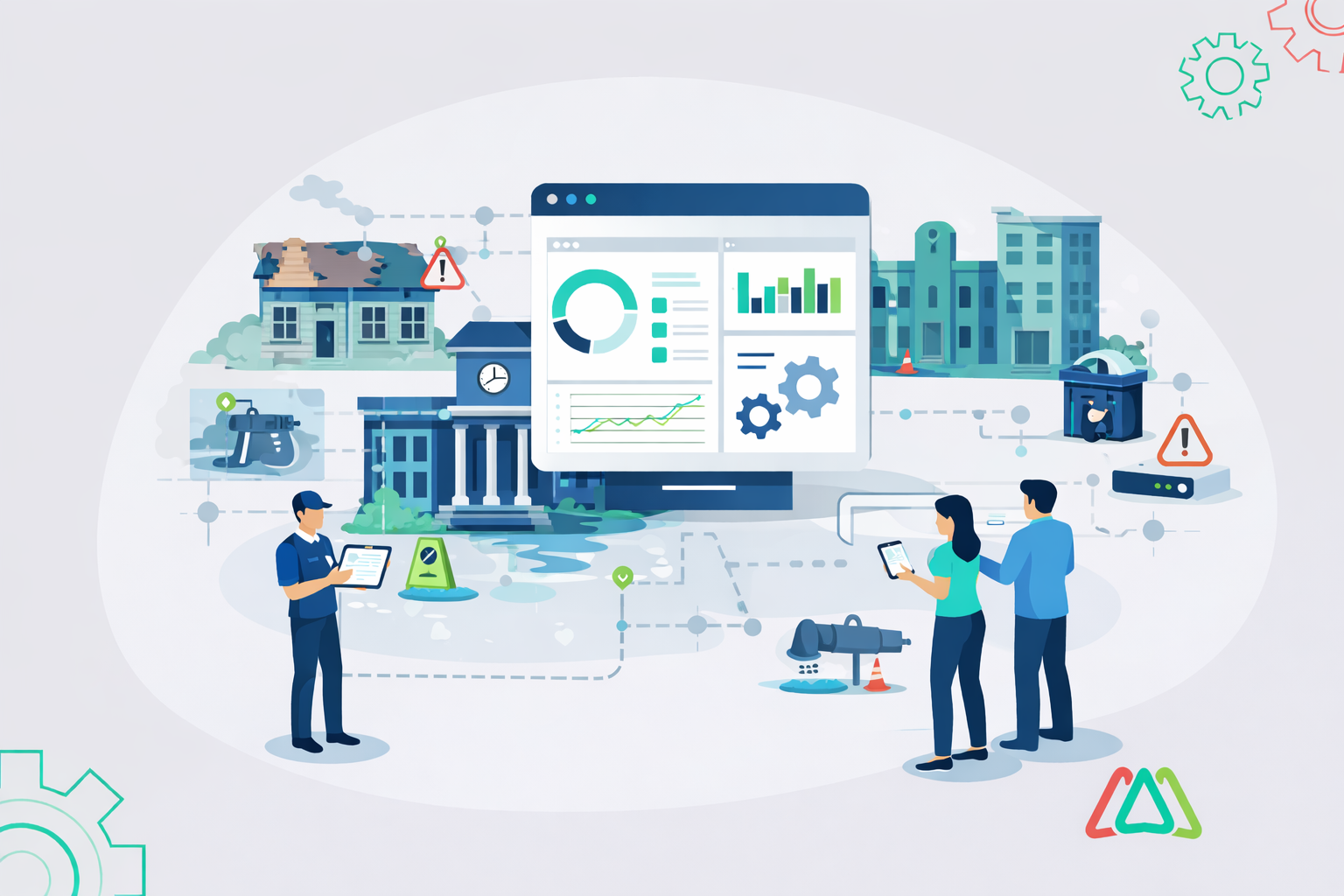
Examples of higher education deferred maintenance include aging HVAC systems operating beyond expected lifespans, deteriorating roofs, outdated electrical systems unable to support modern technology demands, inefficient plumbing infrastructure, and deferred accessibility upgrades. While these postponements may initially appear fiscally prudent and the best option at the time, the cumulative effect is an expanding backlog that compounds over time.
So how does this happen? To begin, campuses accumulate deferred maintenance for several reasons. Historically, institutions have prioritized visible capital projects such as new residence halls, science centers, and athletic facilities. These take precedence over reinvestment in existing assets. The problem is further driven by maintenance budgets that are frequently treated as flexible line items during financial strain. Over the decades, this pattern has created structural underinvestment that has become increasingly difficult to reverse.
The Scope of Higher Education Deferred Maintenance in the United States
The scale of deferred maintenance in higher education in the U.S. is beyond inconsequential. Estimates from credit rating agencies and industry analyses suggest that the combined backlog totals for public and private institutions range into the hundreds of billions of dollars. Some projections indicate that rated institutions alone may require $750–$950 billion in capital reinvestment over the coming decade.
Furthermore, many campus facilities were constructed during major expansion waves in the 1950s through the 1970s. Those buildings are now reaching or exceeding their intended lifecycle benchmarks. Mechanical systems, structural components, and envelope materials designed for 40–50 years of use are operating well beyond that threshold.
Colleges and universities within state systems are particularly vulnerable due to inherent pressures. Large public university networks report billions in unmet maintenance needs. When funding mechanisms emphasize new construction over renewal, aging buildings remain in service without adequate reinvestment.
Additionally, campus footprints have grown significantly. Despite increased demand driven by a growing student population, institutions expanded square footage over the decades without proportionally increasing facility staffing or lifecycle funding. The result is a widening gap between asset inventory and available maintenance resources.
Once again, higher education deferred maintenance is not isolated to a handful of struggling institutions; it is a widespread problem affecting community colleges, regional universities, flagship research institutions, and private colleges alike.
Why Higher Education Deferred Maintenance Is Growing
Financial Pressures and Enrollment Shifts
After the most recent surge in student population during 2008-2009, this trend has shifted. The result is that affected institutions are experiencing its fallout. More specifically, declining demographic cohorts in many regions, increased competition, tuition discounting, and unpredictable public funding have constrained operating budgets. When institutions face difficult financial trade-offs, maintenance is often deferred because the consequences are not immediately visible.
In other words, enrollment volatility exacerbates this issue. Institutions may hesitate to invest in major infrastructure upgrades if long-term enrollment stability is uncertain. Yet postponement increases risk and eventual cost.
Funding Priorities and Capital Bias
Another factor weighing heavily in favor of higher education maintenance deferment is a persistent “capital bias” in higher education funding. New buildings attract donors, generate headlines, and serve as recruitment tools. However, maintenance, by contrast, is largely invisible and certainly less attractive. The reality is that legislatures and governing boards often prefer funding ribbon-cutting projects rather than HVAC replacements.
Without dedicated lifecycle funding models, deferred maintenance accumulates incrementally each fiscal year. Institutions lacking long-term capital renewal strategies face compounding backlog growth.
Workforce and Operational Constraints
Facilities departments are managing larger portfolios with leaner staffing. Many experienced maintenance professionals are retiring, creating knowledge gaps and recruitment challenges. Increased square footage per technician limits proactive maintenance capacity.
When preventive maintenance cycles are compressed due to staffing shortages, minor issues escalate into major failures. This accelerates the deferred maintenance cycle and drives up long-term repair costs.
The Risks of Ignoring Higher Education Deferred Maintenance
Higher education deferred maintenance now represents a multi-dimensional institutional risk. Let’s explore some of these now.
Safety and Compliance Risks
As noted, aging infrastructure increases the likelihood of system failures, water damage, mold, elevator malfunctions, fire safety deficiencies, and ADA noncompliance. Deferred maintenance can compromise environmental controls in laboratories and healthcare education facilities.
Safety incidents not only endanger occupants but also expose institutions to liability and reputational damage.
Enrollment and Competitive Risks
Prospective students and families assess campus conditions during tours. Peeling paint, outdated residence halls, malfunctioning climate control, or visibly deteriorating facilities can influence perception. In a competitive enrollment environment, campus conditions and quality directly impact yield.
Institutions investing in modernized, energy-efficient, well-maintained facilities gain a competitive advantage. Those burdened by higher education deferred maintenance risk falling behind peer institutions.
Credit and Financial Stability Risks
Credit rating agencies increasingly evaluate deferred maintenance as part of institutional financial health assessments. Large backlogs signal a structural imbalance between asset base and financial capacity.
Moreover, deferred maintenance escalates costs. A postponed $200,000 roof replacement can evolve into a multi-million-dollar structural repair if leaks compromise interior systems. The longer maintenance is deferred, the greater the financial exposure.
Strategic Solutions for Higher Education Deferred Maintenance
Addressing deferred maintenance in higher education requires integrated financial, operational, and governance strategies. The following are several avenues to consider.
Financial Planning and Lifecycle Funding
Addressing deferred maintenance in higher education requires shifting from reactive budgeting to structured, long-term capital planning. The following strategies promote sustainable infrastructure management:
1. Establishing Dedicated Capital Renewal Reserves
Creating a dedicated capital renewal reserve ensures that funds are consistently set aside for infrastructure reinvestment rather than redirected during budget pressures. Without protected reserves, maintenance funding is often the first area reduced during financial shortfalls. A formal reserve policy signals institutional commitment to lifecycle funding and reduces the likelihood of future backlog escalation.
2. Funding Depreciation-Equivalent Reinvestment Levels Annually
Institutions should reinvest annually at or near the depreciation value of their physical plant. When annual reinvestment falls short of depreciation, deferred maintenance accumulates. Aligning funding with asset depreciation creates a measurable benchmark that promotes long-term balance between asset wear and capital renewal.
3. Incorporating Total Cost of Ownership Into Capital Approvals
New construction projects should not be approved without first evaluating their full lifecycle cost, including maintenance, utilities, staffing, and eventual renewal. Too often, institutions fund construction but fail to allocate adequate operating support for ongoing upkeep. Embedding total cost of ownership (TCO) analysis into capital planning prevents the creation of future deferred maintenance liabilities.
4. Aligning Facilities Planning With Enrollment Forecasts
Facilities investments must reflect realistic enrollment projections and academic program demand. Overbuilding during periods of demographic uncertainty can unnecessarily increase maintenance burdens without generating corresponding revenue. Strategic alignment between campus footprint, utilization rates, and enrollment forecasts helps institutions optimize infrastructure investment and control long-term deferred maintenance growth.
Some institutions are exploring maintenance endowments or allocating a fixed percentage of operating budgets toward renewal. The key is consistency and long-term commitment.
Data-Driven Facilities Management at Higher Education Institutions
Modern asset management software like CMMS platforms enable campuses to quantify maintenance backlog, prioritize projects by risk, and forecast costs. Accurate data allows leadership to make informed decisions on capital spending.
Here is more information related to CMMS software for educational facilities.
Facilities condition assessments (FCAs) provide structured evaluations of asset health. When integrated into strategic planning, these assessments support evidence-based capital allocation.
Technology can also optimize preventive maintenance schedules, energy management, and predictive analytics, thereby reducing the accumulation of deferred maintenance.
Leadership, Policies and Education Institutional Alignment
Deferred maintenance must be reframed as a strategic priority rather than an operational alternative. Presidents, CFOs, and governing boards need clear visibility into backlog metrics and associated risks.
State governments and policymakers may need to revisit funding models that favor expansion over reinvestment. Advocacy for infrastructure funding at the state and federal levels will be critical, particularly for public institutions.
Cross-departmental alignment that links facilities planning with academic strategy, sustainability goals, and enrollment management must ensure that infrastructure decisions support the institutional mission.
Looking into the Future
The trajectory of deferred maintenance in higher education will significantly influence the future of American campuses. Institutions already navigating demographic shifts, technological transformation, and financial uncertainty cannot afford infrastructure instability.
Climate resilience is another consideration. Aging systems are less energy efficient and more vulnerable to extreme weather. Efforts to modernize equipment and infrastructure tied to sustainability initiatives provide an opportunity to address deferred maintenance while reducing long-term operating costs.
Institutions that are proactive when confronting maintenance backlog challenges through planned capital planning, transparent reporting, and reinvestment will strengthen their resilience. Campuses that continue to defer maintenance, risk compounding liabilities that could undermine institutional sustainability and their future.
Deferred maintenance in higher education deferred maintenance is no longer just about buildings. It is about protecting academic mission, safeguarding student experience, and preserving financial stability in an increasingly competitive landscape.
Conclusion
The state of US higher education deferred maintenance reflects decades of underinvestment, financial strain, and competing institutional priorities. What once appeared manageable has evolved into a widespread and growing risk across the sector.
Addressing higher education deferred maintenance demands requires executive leadership, disciplined financial planning, data-driven facilities management, and policy alignment. Institutions that prioritize lifecycle funding and strategic reinvestment will not only reduce risk but also position themselves for long-term competitiveness and sustainability.
The question is no longer whether campuses can afford to address deferred maintenance. The question is whether they can afford not to.
TABLE OF CONTENTS





Keep Reading
Click Maint CMMS is a computerized maintenance management system built to help churches ...
16 Sep 2026
Plant managers face constant pressure to keep production moving while controlling operating ...
16 Sep 2026
Every day, facility managers juggle numerous responsibilities. Work orders need attention, ...
16 Sep 2026
Equipment breakdowns cost more than the repair bill. Lost production, overtime labor, and ...
15 Sep 2026
Maintenance-as-a-Service (MaaS) is transforming how organizations manage their equipment and ...
11 Sep 2026
Maintenance as a Service (MaaS) is one of the newer concepts in maintenance management that ...
11 Sep 2026
Choosing a CMMS is a high-stakes decision. Get it right, and your maintenance team moves from ...
3 Sep 2026
Construction Management Software: A Step-by-Step Guide by Click Maint Construction teams ...
3 Sep 2026
Construction Management Software By Click Maint Construction companies live and die by ...
3 Sep 2026
Restaurant CMMS: The Best Maintenance Software for Restaurants and the Food Industry When ...
1 Sep 2026
Educational facilities endure heavier wear and tear than most other buildings. Balancing ...
1 Sep 2026
Parts Inventory Management Software by Click Maint Searching for parts inventory management ...
1 Sep 2026
Work Order Management Software If you're responsible for equipment upkeep, responding to ...
28 Aug 2026
Best CMMS for Growing Manufacturers For growing manufacturers, choosing the right ...
28 Aug 2026
A Definitive Guide for Growing Manufacturers For growing manufacturers, equipment downtime is ...
28 Aug 2026
Introduction For maintenance managers and facilities leaders at small to mid-sized multi-site ...
27 Aug 2026
Introduction If your maintenance operation still runs on spreadsheets, whiteboards, relies on ...
25 Aug 2026
When a machine breaks, the maintenance team needs the right part fast. If parts are missing, ...
19 Aug 2026
Introduction The landscape of facility maintenance is transitioning into a more strategic ...
21 Jul 2026
Introduction A growing maintenance backlog is a telltale sign that the maintenance team is ...
14 Jul 2026