Reena Sommer | 1 Oct 2026


Even for small maintenance teams, investing in CMMS software is worthwhile when manual tracking, missed preventive maintenance, scattered records, or increasing work order volume drain time and resources. User-friendly platforms like Click Maint allow teams to consolidate maintenance workflows efficiently without needing a large department structure.
Small teams operate with limited personnel, forcing technicians to juggle multiple responsibilities, such as executing preventive maintenance tasks in the morning, managing emergency breakdowns in the afternoon, and logging work orders before ending their shift. Maintaining organization becomes a significant challenge when maintenance data is fragmented across emails, text messages, paper logs, and spreadsheets.
A Computerized Maintenance Management System (CMMS) addresses these maintenance challenges. Whether CMMS software justifies the cost for a small workforce relies less on staff headcount and more on the overall complexity of your maintenance demands.
What is CMMS Software?
CMMS software is a digital system used to organize and manage maintenance operations. It helps maintenance teams manage work orders, preventive maintenance schedules, equipment records, maintenance requests, parts, and maintenance data from one centralized system. Instead of relying on paper forms or multiple spreadsheets, a maintenance team can use a CMMS to create a more consistent maintenance process.
For small maintenance teams, this means spending less time searching for information and more time completing maintenance work.

Do Small Maintenance Teams Need a CMMS?
Small maintenance teams benefit from CMMS software when maintenance becomes difficult to manage manually. The number of technicians is only one factor. For example, a three-person maintenance team could still be responsible for hundreds of assets, recurring inspections, preventive maintenance schedules, emergency repairs, maintenance requests, and spare parts. A CMMS becomes useful when the team starts experiencing problems such as:
- Work orders being forgotten or delayed
- Preventive maintenance tasks being missed
- Maintenance requests arriving through multiple channels
- Equipment history being difficult to find
- Technicians not knowing which tasks have priority
- Parts being unavailable when repairs are needed
- Managers lacking visibility into maintenance performance
- Too much time being spent updating spreadsheets
If these problems are happening regularly, a CMMS provides more value than continuing with manual maintenance management.
Why is CMMS Software Worthwhile for Small Teams?
The biggest advantage of CMMS software for a small maintenance team is organization. Small teams usually have limited labor resources. Losing even a few hours each week to administrative work, searching for records, or coordinating tasks can affect productivity. A CMMS can provide one place and source of truth to manage maintenance information.
1. Centralize Work Orders
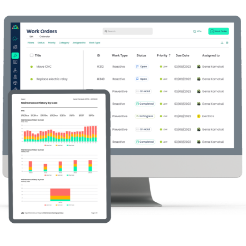
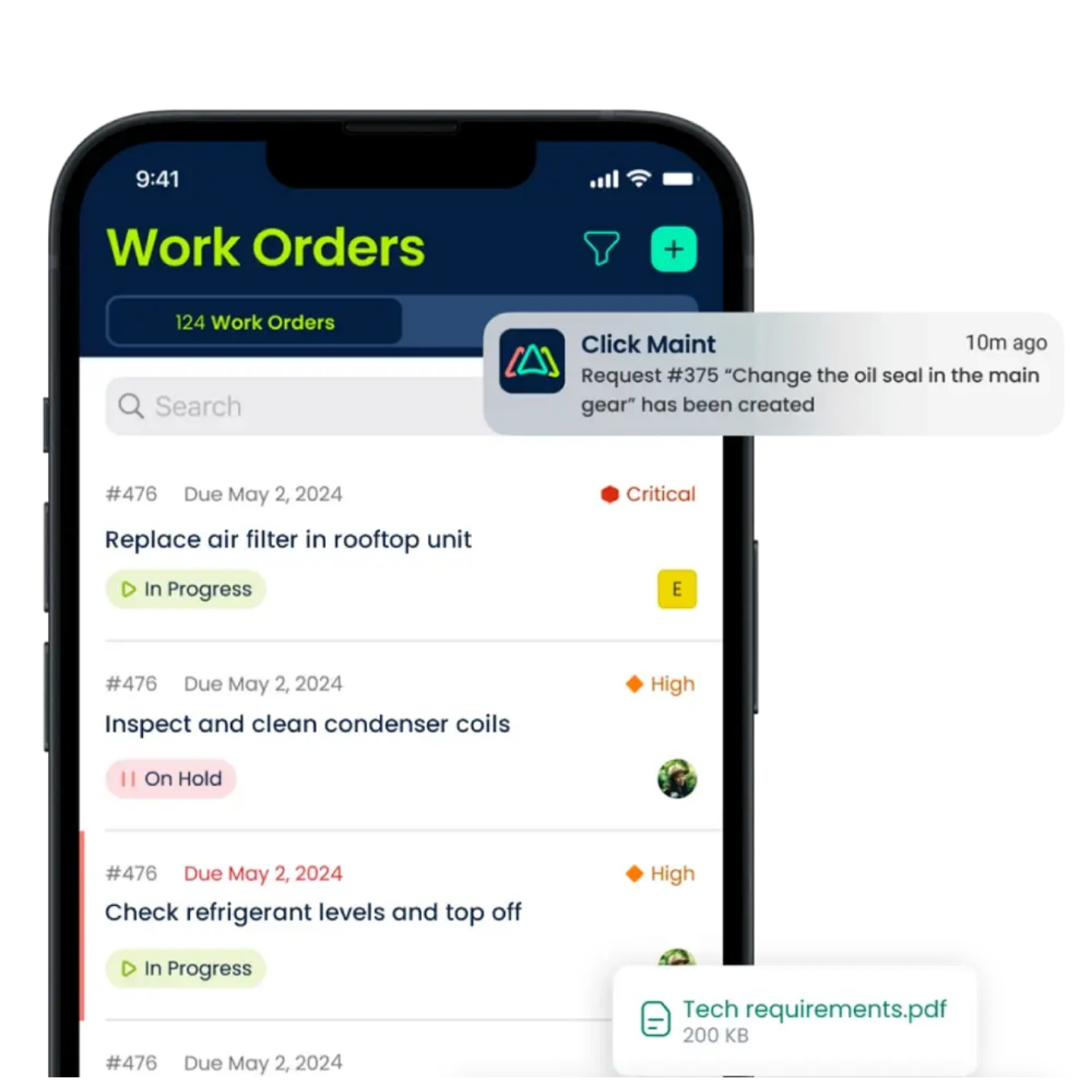
Work orders are easier to lose when they arrive through phone calls, emails, paper notes, and conversations. A work order management system gives the team a centralized process for receiving, assigning, tracking, and completing maintenance work. A maintenance manager can see what needs attention while technicians can check assigned work and update its status. For a small team, this can reduce confusion about who is responsible for each task.
.png?width=2095&height=1700&name=work%20orders%20list_2%20(1).png)
2. Schedule Preventive Maintenance
Preventive maintenance can become difficult to manage as the number of assets increases. A CMMS can help teams schedule recurring maintenance based on planned intervals. Instead of relying entirely on calendars or memory, the system can help organize upcoming maintenance activities. This makes it easier for a small maintenance team to stay ahead of inspections, servicing, and routine equipment maintenance.
3. Keep Equipment Information Organized
Maintenance technicians frequently need information about an asset before completing a repair. A CMMS centralizes information such as:
- Asset details
- Maintenance history
- Previous work orders
- Repair notes
- Preventive maintenance tasks
- Equipment documents
- Associated parts
Having this information available in one system can reduce the time technicians spend searching through files or asking other employees for equipment history.
4. Reduce Administrative Work
Small maintenance departments rarely have dedicated administrative employees. That means technicians and maintenance managers may spend part of their day entering information, updating spreadsheets, finding documents, or communicating work order status.
CMMS software simplifies many of these processes. For example, technicians can update work orders as maintenance is completed instead of maintaining separate paper records that must later be entered into another system.
5. Prioritize Maintenance Work
Not every maintenance request has the same level of urgency. An equipment failure affecting production may require immediate attention, while a minor facility repair can potentially wait.
A CMMS provides better visibility into open maintenance work, making it easier for maintenance managers to organize tasks according to urgency, asset importance, available resources, and due dates. For a small team with limited capacity, better prioritization can be especially valuable.
6. Build Maintenance History
Small teams often rely heavily on employee knowledge. That creates a problem when an experienced technician leaves the company. Important knowledge about recurring equipment problems, previous repairs, or maintenance procedures can leave with that employee.
A CMMS creates a digital maintenance history. Future technicians can review previous work and better understand what has happened to an asset over time.
7. Make Maintenance Decisions With Better Data
Spreadsheets may tell you what work was completed, but they can become difficult to analyze as maintenance operations grow. CMMS reporting can help managers monitor maintenance performance. Depending on the system and available data, maintenance teams may track metrics such as:
- Work order completion
- Maintenance backlog
- Equipment downtime
- Preventive maintenance completion
- Mean Time to Repair (MTTR)
- Mean Time Between Failures (MTBF)
- Maintenance costs
A small team does not need dozens of KPIs. Tracking a few useful metrics can help managers identify recurring problems and improve maintenance planning.
CMMS vs. Spreadsheets for Small Maintenance Teams
Spreadsheets work well when maintenance requirements are simple. Problems often appear as the number of assets, work orders, employees, locations, and preventive maintenance schedules increases.
|
Maintenance Task |
Spreadsheet |
CMMS |
|
Work orders |
Manual tracking |
Centralized tracking |
|
Preventive maintenance |
Calendar/manual scheduling |
Organized PM schedules |
|
Asset history |
Multiple rows/files |
Centralized asset records |
|
Maintenance requests |
Often separate |
Centralized process |
|
Technician updates |
Manual |
Recorded in the system |
|
Reporting |
Manual analysis |
Maintenance reporting |
|
Parts tracking |
Separate sheets |
Can be connected to maintenance records |
|
Scalability |
Becomes harder as data grows |
Designed for ongoing maintenance operations |
The right choice depends on operational complexity rather than simply employee count.
When Spreadsheets are Sufficient for Maintenance Management?
Not every small maintenance operation needs CMMS software immediately. A spreadsheet may still be sufficient when you have very few assets, limited recurring maintenance, low work order volume, and one person handling most maintenance activities.
The key question is whether your existing system is still working efficiently. If spreadsheets require increasingly complicated formulas, multiple files, frequent manual updates, or constant communication to determine what work has been completed, it may be time to consider a CMMS.
How CMMS Software Reduces Maintenance Costs?
A CMMS does not automatically reduce maintenance costs simply because a company implements one. The potential savings come from improving maintenance processes. For example, better preventive maintenance scheduling can help teams identify problems before some failures become more disruptive. Better work order tracking can reduce duplicated effort. Organized asset histories can help managers identify equipment experiencing repeated maintenance problems. For small teams, even modest efficiency improvements can matter because technician time is limited.
Does a CMMS Help Reduce Equipment Downtime?
A CMMS absolutely supports efforts to reduce avoidable downtime by helping teams organize preventive maintenance, prioritize repairs, maintain equipment history, and respond to maintenance issues more consistently.

Consider a machine that fails every few months. Without centralized maintenance records, each repair may be treated as a separate incident. With maintenance history available in a CMMS, the team can review previous failures and repairs. That information can help maintenance managers investigate recurring problems and decide whether a different maintenance strategy is needed.
How Many Maintenance Employees Do You Need Before Using a CMMS?
There is no minimum number of maintenance employees required to use CMMS software. A small two- or three-person maintenance department managing many critical assets may have a stronger need for CMMS software than a larger team responsible for a small number of simple assets.
Instead of asking:
“Is our maintenance team big enough for a CMMS?”
Ask:
“Are our maintenance operations becoming too complex to manage efficiently with our current process?”
That question provides a better indication of whether a CMMS is worth considering.
Signs Your Small Maintenance Team Needs a CMMS
Consider evaluating CMMS software if several of these situations sound familiar:
- Technicians regularly miss preventive maintenance
- Work orders get lost or forgotten
- Maintenance requests come through too many channels
- Equipment history is difficult to locate
- Technicians rely heavily on memory
- You cannot easily identify overdue maintenance
- Maintenance reporting requires hours of spreadsheet work
- Parts are difficult to track
- Equipment failures frequently interrupt operations
- Your organization is adding assets, facilities, or locations
The more frequently these issues occur, the stronger the business case for improving your maintenance management process.
What Should a Small Maintenance Team Look for in CMMS Software?
Small teams typically benefit from software that is straightforward rather than unnecessarily complex. When comparing CMMS solutions, consider the following checklist:
Ease of Use
Technicians should be able to learn everyday functions without extensive training.
Work Order Management
Look for an easy way to create, assign, prioritize, update, and close work orders.
Preventive Maintenance
The system should make recurring maintenance easier to organize and schedule.
Asset Management
Teams should be able to access important equipment information and maintenance history.
Mobile Access
Mobile functionality can help technicians access and update maintenance information while working away from a desk.
Inventory Management
If spare parts are important to your maintenance operation, consider whether the CMMS can help track maintenance inventory.
Reporting
Look for reports that provide useful information without requiring complicated setup.
Scalability
Your CMMS should be able to support the team as your assets, users, locations, and maintenance workload increase.
Cost
Consider the total cost of the software against the administrative time, maintenance problems, and inefficiencies it could help address.
Is CMMS Software Worth the Cost for a Small Business?
CMMS software can be worth the cost when the value created through better organization, maintenance planning, visibility, and technician productivity exceeds the cost of implementing and using the system. Before purchasing software, estimate how much time your team currently spends on activities such as:
- Searching for maintenance information
- Updating spreadsheets
- Tracking down work order status
- Re-entering maintenance data
- Managing recurring maintenance manually
- Looking for equipment history
- Coordinating maintenance requests
These costs are easy to overlook because they are distributed across everyday work. Understanding them can help you evaluate the potential return from CMMS software.
How Click Maint Helps Small Maintenance Teams
Click Maint is CMMS software designed to help maintenance teams organize and manage everyday maintenance operations. Rather than relying on disconnected spreadsheets, paper forms, and manual processes, organizations can use Click Maint to centralize key maintenance activities. Depending on your organization's configuration and requirements, Click Maint can support areas such as work order management, maintenance requests, preventive maintenance, assets and equipment, parts and inventory, and maintenance reporting.
For small teams, the objective is not to make maintenance management more complicated. It is to give technicians and managers a clearer way to organize their existing maintenance work.
Frequently Asked Questions
Is a CMMS worth it for a small maintenance team?
A CMMS can be worth it for a small team when work orders, preventive maintenance, equipment records, and maintenance requests are becoming difficult to manage manually. The value depends more on maintenance complexity than team size.
Can a two-person maintenance team use a CMMS?
Yes. A two-person maintenance team can use a CMMS, particularly when responsible for many assets, recurring maintenance schedules, or critical equipment.
Is CMMS software better than Excel for maintenance?
Excel can work for simple maintenance operations. A CMMS becomes more useful when teams need centralized work orders, preventive maintenance scheduling, asset histories, maintenance requests, inventory information, and reporting.
What does CMMS mean?
CMMS stands for Computerized Maintenance Management System. It is software designed to help organizations organize maintenance work and related information.
What is the biggest benefit of CMMS for a small team?
One of the biggest benefits is centralization. Work orders, preventive maintenance, assets, maintenance records, and other information can be managed from one system rather than several disconnected tools.
Can CMMS software help with preventive maintenance?
Yes. CMMS software can help maintenance teams organize and schedule recurring preventive maintenance activities and maintain records of completed work.
When should a small business switch from spreadsheets to CMMS?
Consider switching when spreadsheets become difficult to maintain, preventive maintenance is being missed, work orders are getting lost, or maintenance managers lack clear visibility into maintenance activities.
So, is CMMS Software Worth it for a Small Maintenance Team?
For many small maintenance teams, CMMS software can be worth the investment when manual maintenance management starts creating more work than it saves. A small team does not need complicated enterprise software simply because it wants better maintenance management. The goal should be to find a CMMS that makes everyday tasks easier: organizing work orders, scheduling preventive maintenance, maintaining equipment history, tracking maintenance activities, and giving the team better visibility.
If your maintenance team is spending too much time managing spreadsheets, searching for information, or trying to remember what needs to be done next, moving to a CMMS may be a practical next step.
Simplify Maintenance Management With Click Maint
See how easy it is to manage work orders, preventive maintenance, assets, equipment, and maintenance requests with Click Maint CMMS.
Take the quick 2-minute interactive product tour and see how Click Maint can help your small maintenance team stay organized and get more maintenance work done.
Ready to simplify maintenance for your small team?

TABLE OF CONTENTS