Matthew Wawrin | 14 Oct 2024


In today's fast-paced business environment, businesses find it more challenging to gain a competitive edge. Maintenance is an area often overlooked that can significantly impact the bottom line. Maintenance as a Service (MaaS) is a revolutionary approach that's transforming how businesses manage their assets. This innovative model offers a host of benefits that traditional maintenance methods simply can't match. From enhanced scalability and flexibility to access to cutting-edge technologies, MaaS is reshaping the maintenance and asset management landscape. This article explores why businesses should consider MaaS as an operational strategy and how it can drive efficiency, reduce costs, and improve overall operational performance.
What is Maintenance as a Service (MaaS)?
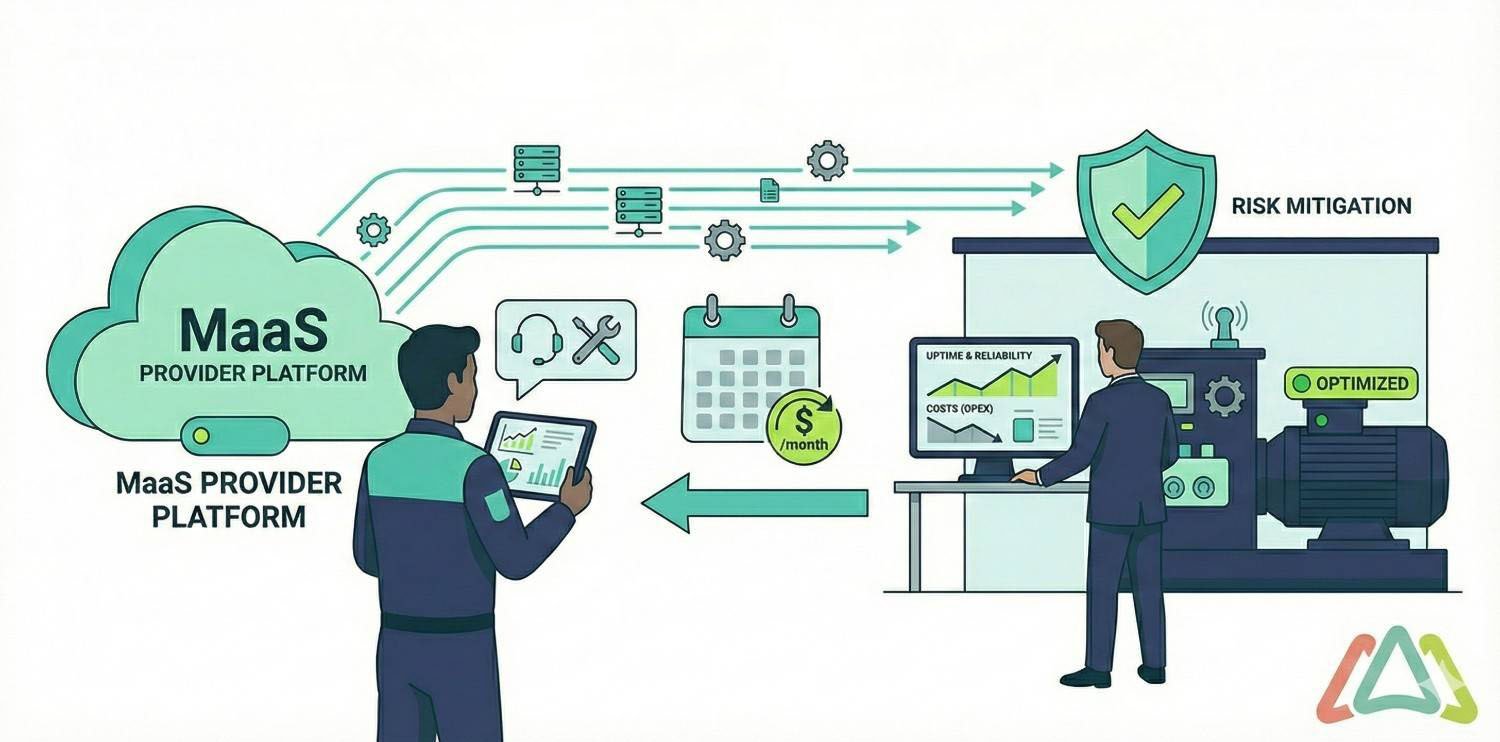
Maintenance as a Service (MaaS) is a revolutionary approach to equipment upkeep that leverages cloud-based technologies and data analytics. Unlike traditional maintenance models, MaaS offers a comprehensive, outsourced solution for managing your organization's maintenance needs. This innovative service combines predictive maintenance strategies, remote monitoring capabilities, and expert technician support to optimize asset performance and minimize downtime.
By adopting MaaS, businesses can access cutting-edge maintenance technologies without significant upfront investments. This model provides scalable solutions that adapt to the company's evolving needs, ensuring that maintenance practices remain efficient and cost-effective as operations grow or change. MaaS also offers unparalleled flexibility, allowing organizations to tailor maintenance strategies to their specific equipment and industry requirements.
Traditional Maintenance Vs. Maintenance as a Service
Traditional maintenance approaches often involve reactive strategies and in-house teams, while Maintenance as a Service (MaaS) offers a proactive, outsourced solution. MaaS provides superior scalability, allowing businesses to adjust service levels as needs change. This flexibility is particularly valuable for companies with fluctuating maintenance requirements.
Advanced Technologies
MaaS providers typically leverage cutting-edge technologies like loT sensors, AI-driven predictive analytics, and cloud-based CMMS platforms. These tools enable real-time monitoring, accurate failure predictions, and optimized maintenance schedules. In contrast, traditional methods struggle to keep pace with technological advancements, potentially leaving businesses at a competitive disadvantage.
Cost-Efficiency
While traditional maintenance often requires significant upfront investments in equipment and personnel, MaaS operates on a more predictable, subscription-based model. This approach can lead to substantial cost savings and improved budgeting for many organizations.
How MaaS Differs from Traditional Maintenance Approaches

Scalability and Flexibility
MaaS offers unparalleled scalability, allowing businesses to adjust maintenance resources as needs fluctuate. Unlike traditional approaches, MaaS provides on-demand access to expertise and tools, eliminating the need for hefty upfront investments. This flexibility enables companies to optimize costs while maintaining peak operational efficiency.
Access to More Advanced Technologies
With MaaS, organizations gain access to cutting-edge maintenance technologies without the burden of ownership. From Al-powered predictive analytics to loT sensors, MaaS providers leverage the latest innovations to enhance asset performance and longevity. This technological edge empowers businesses to stay competitive and proactive in their maintenance strategies, far surpassing the capabilities of traditional in-house maintenance teams.
Key Benefits of Adopting a Maintenance as a Service Model

Cost-Effective Solutions
Maintenance as a Service (MaaS) offers significant cost savings by eliminating the need for in-house maintenance teams and expensive equipment purchases. Companies can leverage expert knowledge and cutting-edge technology without substantial upfront investments.
Enhanced Efficiency and Uptime
MaaS providers utilize advanced predictive maintenance techniques and real-time monitoring, significantly reducing unexpected breakdowns. This proactive approach ensures higher equipment reliability and minimizes costly downtime, allowing businesses to operate more efficiently.
Scalability and Flexibility
With MaaS, organizations can easily scale their maintenance needs up or down based on business demands. This flexibility enables companies to adapt quickly to changing market conditions without being burdened by fixed maintenance costs or underutilized resources.
Improved Scalability and Flexibility
MaaS offers unparalleled scalability and flexibility compared to traditional maintenance approaches. With this model, you can easily adjust your maintenance resources up or down based on your current needs. Whether the organization is expanding operations or streamlining processes, MaaS adapts.
On-Demand Expertise
Access a diverse pool of specialists without the overhead of full-time hires. This allows businesses to tackle complex issues efficiently, bringing in experts only when needed.
Customizable Solutions
Tailor maintenance strategies to fit unique operational requirements. MaaS providers offer modular services, allowing companies to select the specific support the business needs, from preventive maintenance to emergency repairs. By leveraging MaaS, businesses can enhance their ability to respond to market changes and operational demands swiftly and cost-effectively.
Access to Advanced Technologies and Experts
When adopting Maintenance as a Service (MaaS), businesses are not just outsourcing maintenance tasks; they’re gaining access to cutting-edge technologies and industry experts. MaaS providers invest heavily in the latest maintenance tools, software, and methodologies, which would be cost-prohibitive for many businesses to acquire independently.
State-of-the-Art Solutions
MaaS offers advanced predictive maintenance algorithms, loT sensors, and Al-driven analytics. These technologies enable proactive maintenance strategies, minimizing downtime and extending asset life cycles.
Expert Knowledge on Demand
With MaaS, organizations can tap into a pool of specialized technicians and engineers. Their diverse experience across industries brings fresh perspectives and innovative solutions to maintenance challenges, ensuring best practices are always applied.
Key Benefits of MaaS
Cost Efficiency and Improved Uptime
Maintenance as a Service (MaaS) offers significant cost savings by eliminating the need for in-house maintenance teams and expensive equipment purchases. This scalable approach allows businesses to pay only for the services they need when they need them. Additionally, MaaS providers use advanced technologies and predictive maintenance strategies to maximize equipment uptime, reducing costly breakdowns and production delays.
Enhanced Focus and Data-Driven Decisions
By outsourcing maintenance tasks, companies can concentrate on their core business activities, boosting overall productivity. MaaS also provides comprehensive data analytics, enabling informed decision-making about asset management, maintenance schedules, and equipment replacement. This data-driven approach ensures compliance with safety regulations and optimizes maintenance processes for long-term success.
Why now is the time to adopt Maintenance as a Service

In today's rapidly evolving industrial landscape, businesses can't afford to lag in maintenance strategies. Maintenance as a Service (MaaS) offers a compelling solution to stay competitive and efficient. With the rise of Industry 4.0 and loT technologies, MaaS leverages advanced data analytics and predictive maintenance capabilities, enabling companies to optimize their operations like never before. The scalability of MaaS allows businesses to adapt quickly to changing needs, while its flexibility ensures that maintenance resources are allocated precisely where and when they're needed. By embracing MaaS now, organizations can future-proof their maintenance processes, reduce downtime, and ultimately boost their bottom line in an increasingly digital world.
Why does your Business need MaaS?
In today's fast-paced business environment, staying competitive requires efficient, cost-effective maintenance solutions. Maintenance as a Service (MaaS) offers a revolutionary approach that can transform your operations. By outsourcing maintenance to specialized providers, you gain access to cutting-edge technologies and expertise without the hefty investment in equipment or training.
MaaS provides unparalleled flexibility, allowing you to scale services up or down based on your needs. This adaptability is crucial for businesses facing fluctuating demands or seasonal changes. Moreover, MaaS providers typically offer 24/7 support, ensuring minimal downtime and maximizing productivity.
Implementing MaaS can lead to significant cost savings, improved asset performance, and enhanced safety compliance. It's not just a service; it's a strategic advantage that can propel your business forward in an increasingly competitive landscape.
Ready to revolutionize your maintenance strategy? Don't let outdated approaches hold your business back. Embrace the future of maintenance with MaaS and unlock a world of benefits. From enhanced efficiency to cost savings, the advantages are too significant to ignore.
Conclusion
Maintenance as a Service offers a transformative approach to equipment upkeep that can significantly benefit your business. By leveraging MaaS, you gain access to cutting-edge technologies, scalable solutions, and unparalleled flexibility, all while reducing costs and improving operational efficiency. As industries continue to evolve, embracing MaaS positions your company at the forefront of maintenance innovation. Don't let outdated maintenance practices hold your business back. Explore how MaaS can revolutionize your maintenance strategy and drive your organization toward greater success.

TABLE OF CONTENTS